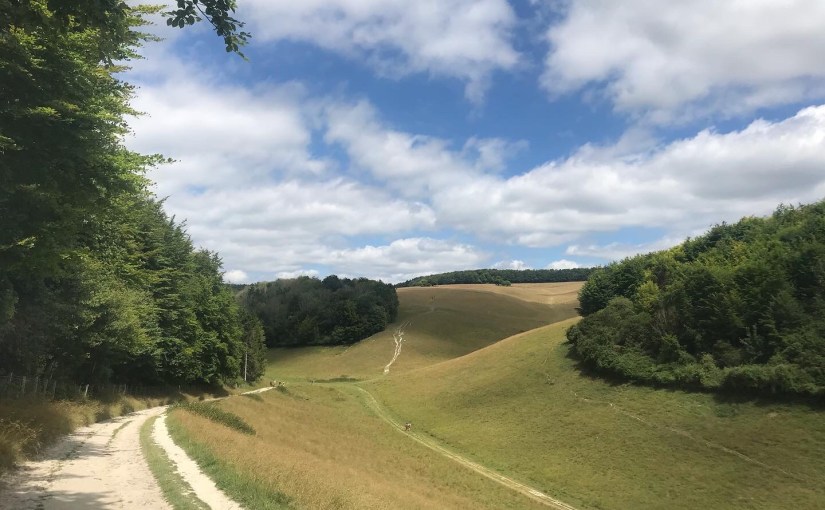
Ar y Bysiau (Welsh: on the buses)

I’m someone who can drive but doesn’t currently have a car. I rely on public transport and good old walking wherever I go. When I go on hiking trips to the Lake District or my homeland, North Wales, I use the public buses to get everywhere. If you’re a car owner you’re probably recoiling in horror right now, but let me tell you about the joy of bysiau.

Travelling on foot or by bus means that you are forced to really look around where you’re based, to see how it’s connected with everything around it, where the little paths and streams are, the small bridges and stepping stones that connect fields, the backroads to the path up the local hill. If you have a car you spend your time leaving the place you’re in to find something better on the map. You’ll never see those tiny streams and paths or notice that the old railway line has been turned into a leafy walk to the next village.

I have just spent a few days in a North Welsh hamlet with only two bysiau a day, but with the Lôn Las Ogwen railway track footpath on its doorstep. Everyone in the accommodation around me was offering me lifts to towns and attractions around us, but not one of them climbed the local hill, walked through the local forest or used the Lôn Las Ogwen to get to the next village. They never found the Blas Lôn Las farm cafe and shop en route, or the path that links it to the local Moelyci mountain in the Carneddau.

They never worked out that they could catch a bus from the next town (Tregarth) to the Ogwen Valley, where a volunteer-run bus (Bws Ogwen) would carry them to the start of all the great mountain hikes in the Glyderau and Carneddau. They didn’t chat to the two drivers who run it because they were the only ones on board and found out where the best pub was in Bethesda. They never found the Pant-yr-Ardd pub in Tregarth which is hosting a rodeo tonight (so sad not to be there) or met any of the funny, welcoming, wry locals who would tell them why the local shop closed or why they were struggling to get on the property ladder.

Now on the island of Anglesey, or Ynys Môn in Welsh, I’m restricted to bysiau but there is one bus, the 62, that stops everywhere along the east coast so you can make up your own hikes between stretches of the coast path. I make the most of my waiting time for the 62 by going for coffee or ice-cream at Amlwch harbour or Moelfre village, chatting to people at the table or bench next to me because that’s what people do here.

This trip has reminded me of the girl I was in my teens, sometimes with my mum but mostly alone, travelling by bus around my homeland, chatting to people and knowing the tracks and trails of the land like the back of my hand because I’ve walked them over and over again. Being so-called ‘restricted’ by bysiau means I return again and again to well-worn paths, like the one I’ve just done between Amlwch and Point Lynas. I like finding the small landmarks again – the tiny bridges over streams, the sea-wall paths around bays – and walking them again and again until I’m part of them. Once again, I was the only one on the bus, and the driver said, in that wave-like North Welsh accent I know so well, “You might struggle to find a seat…” as I boarded. He drove into village after village, having to turn around and come back on himself in each one, because that’s what the service does – drives into a village and out again like a bee finding nectar in a row of flowers.

I have come full circle to my teenage self, walking the land alone and relying on bysiau to get around. Wales is full of girls like I was – I can see them now, out with their mums and grandmothers, hoping for something dramatic to happen, not realising that their solo roaming on the coast path will come to define who they are in the future. Their hair blows in the wind and their pale, freckled faces turn to the sun as they wait at the bus stop, watchful and expectant.

It’ll come, girls, it’ll come.
Misty

White horses appear to be a theme in my life, so when I sat down to eat my lunch during yesterday’s hike, I wasn’t surprised to find one munching some grass right next to me.

Misty’s owner told me that she is 15 (about 45 in human years) and that she was rescued from a bad life in Ireland where she’d been forced to have lots of foals and been in a road accident.

Now she lives a peaceful existence on the South Downs, but is still afraid of fast-moving bikes and cars.

What I didn’t know is that the grass that surges after summer rains is like crack for horses. It’s full of sugar and they go crazy for it, hence the munching. Misty’s owner said they’d ‘work it off’ by having a quick trot after lunch.

After she left, her soulful eyes looking at me sideways under long lashes, I thought about Misty in her midlife prime, having lived a difficult life but finding peace (and sweet grass) on the South Downs and realised we had a lot in common.

If you’ve read Cheat Play Live you’ll know how White Horse in Agonda was my spirit animal, showing me what a free and independent life could be like, by the sea. Misty, although not completely free, reminded me that the next move I make needs to be where the grass is sweet and the humans are kind. I think I know where that is.

For better or worse

I’ve had something in my mind for a while now, helping me navigate each day.

It was something Brené Brown said in her Power of Vulnerability audiobook, and it was basically this: “Are you trying to make the world better or worse? There is no in between – it’s binary.”

Sometimes the simplest of lines hits home hardest. It’s made me reassess every action or word since I heard it. Perhaps in my previous life I would’ve been sharp with someone on the end of a phone who is trying to sort out a problem for me. Now I think, “Perhaps they get angry people all the time and would appreciate a kind word.” Perhaps before I might’ve stood steadfastly in a queue for the checkout because it was ‘my turn’, but now I check behind me to see if the person there is only carrying a carton of milk. I let them go first.

It’s all those small actions that add up to a whole day of making things better or worse.

On yesterday’s solo hike, I sat outside a café in a small village and watched a woman in her eighties helping people. She appeared to be a community volunteer wearing hi-vis armbands.

If someone looked lost or confused, she got up out of her deck chair in the shade, put her hand on their arm and asked, “Can I help you?” Even if she couldn’t, I noticed that each person she approached looked so happy after the encounter.

That lady. That’s who I want to be.

https://www.amazon.co.uk/dp/B0B3Z5G8TY/

Herd community

One of the best things about solo hiking for me is not knowing who I’m going to meet along the way. I often end up chatting to someone, briefly, and there is something special about meeting them on the open road, away from any distractions.

Last weekend I met a woman with a dog called Bonnie (sadly I’d didn’t get a picture of her but I feel awkward asking someone for a pic in the moment).

Bonnie was a sheepdog – a border collie. Normally these dogs are too intent on herding some unseen sheep to pay attention to humans but Bonnie came up and pressed her head against my leg.

I got chatting to her owner who said Bonnie has a gift for seeking out people who need a dog hug. In the woods near where they live, she told me, Bonnie has twice tracked down people who are crying and feeling lost and stayed with them. Perhaps she is using her herding instinct to look for humans who need contact with other beings to feel good about themselves. That certainly applies to me.

I love to walk alone but I love the people and dogs I meet even more.

Order your copy here!

It’s launch day!

Dark Horses Ride is a story of midlife reinvention, of friendships, relationships and a working life all put to the test by the seismic effects of menopause. 

​​​​​​​But it is also a story of love and homecoming. It is about the healing power of walking and meditation, the therapeutic process of writing and one woman’s determination to redefine what success and happiness look like.

Living the dream isn’t all she hoped it would be when Lisa swaps a high-flying job in London for a freelance life as a writer, editor and yoga teacher by the sea in India. She struggles to control the tide of emotions that hit her as the red mists of menopause descend and she begins to question whether her new life – and her relationship with a much younger man – are all she hoped they would be.

When the pandemic hits, Lisa decides that the universe has made the decision for her and back in England, she falls for the charms of a man her own age. However, he is not who he appears to be. Neither are the friends she’d hoped would support her when she publishes her first book and releases her ‘dark horses’ for all the world to see. 

After travelling back to her homeland in Wales and reconnecting with ‘The Most Handsome Man in Goa’ in India, Lisa is forced to confront her dark horses alone when her health and hormones threaten to derail the happiness she’s learned to live for.

ORDER HERE and don’t forget to rate and review – it’s so important to authors. Thank you for all the support for my writing on this blog – my books wouldn’t be here without it.

Wholehearted

This past week I have been listening to Brene Brown talking about the Power of Vulnerability. She is a researcher who has found that people who live ‘wholehearted’ happy lives have several things in common, many of which relate back to the yoga lifestyle. Her data shows that these people are spiritual in one way or another, that they believe that we are all connected by something bigger than ourselves. It also shows that wholehearted people engage in creative pursuits and practice gratitude.

Santosha is a 5,000 year old Sanskrit word for ‘contentment’ – being happy with whatever you have. As a yoga practice, it’s being grateful for specific things in your life. On my morning walks I find it improves my emotional state so much if I list these things in my mind. They can be as simple as finding a new path to walk on or having a chat as I buy a coffee.

Today I met Valerie, a lady who told me she’d been evacuated during the war to Shropshire, near the Welsh border. We talked about how much we liked wildflowers and the tamarisk bushes by the sea, even though they’re overgrown. Each person who walked past us said, “Ooh they need to be cut back, don’t they?” but we grinned at each other and said the bushes were lovely, filled with bees on the tiny flowers.

Thank you, Valerie, for reminding me that the obstacles in our path are sometimes worthy of the space they take up in our lives – we can simply walk around them, gazing in awe at the sight, rather than raze them to the ground.

Give and take

I’ve been thinking a lot about transactional friendships and relationships, where one party always expects something in return for a deed done.

I’ve found it occurs a lot in female friendships, from remembering to send a birthday or Christmas card, inviting someone over for dinner or even deciding whether or not to end a text with a ‘x’.

Sometimes I’ve given someone a gift or bought them a coffee for no reason, just because I want to. It pains me when days or weeks later, they ‘pay me back’, leading to a neverending cycle of giving and taking where each party has to remember their place in the queue.

What would happen if we just gave and received without expectation?

Stroppy Cow

I went hiking at the weekend with a good friend and whilst we chatted, she remarked that I seem so much softer than when she first met me; less spiky.

I know I am because I feel it.

I underwent a massive life change in 2018/19 when I went through therapy, yoga training, giving up alcohol and opting out of a stressful corporate life. All of those things had combined to make me somewhat ‘scary’ to those who encountered me, as I tended to bark at people, online and in person.

What I didn’t realise until this year, though, was how much I was governed by my hormones at that time. I was 51 and going through peri-menopause – the stage before full menopause where your hormones are adjusting after a lifetime of monthly cycles. But like many women, I didn’t realise. I look back now and can see that I had a suite of symptoms that are completely in line with perimenopause and menopause.

I had trouble sleeping for years, which did improve when I gave up drinking, but remained intermittently, manifesting at 3am most nights where I’d find a TV show to binge on to quiet my brain. I felt anxious about things that in retrospect, shouldn’t have caused anxiety, but they felt very real. I recognised that feeling from years of PMS.

Much of my anxiety stemmed from an inability to control my emotional responses to things, be they work scenarios or relationships. I’d lie awake at 3am thinking about whether I’d burned my bridges by having a red-hot response to something. I knew I was doing it but couldn’t seem to help it. A red mist would descend and I’d say the thing I’d hoped not to say, and then spend days and nights worrying about its impact. It scared me a lot, and now I think I remember my mother going through a period like this, and it made me wonder if it was the reason behind her retreat into an almost hermit-like existence.

I also had horrific joint pain in my shoulders and hips. It was, as I explore in my memoir, a manifestation of the stress I was experiencing at work, but it was also result of falling oestrogen levels. No one tells you that oestrogen is a painkiller, and when you lose the levels, you gain the pain. I went for countless clinical tests and x-rays to determine the problem, when the obvious answer was hormonal change.

It was only in the last year or so, when my symptoms heightened during the second lockdown, that menopause was suggested to me by a friend as the possible cause of my issues. A year ago I’d made a list on my phone of everything that was causing me anxiety and I’ve kept it because now it seems so ridiculous. I cried over things that now generate barely a raised eyebrow and got angry over nothing. I was a stroppy cow.

In the new year I sought help and I was lucky enough to be assigned to an HRT nurse in my local practice who helped me determine what I needed. I started off on a patch (Evorel Sequi) that mimicked a ‘normal’ cycle with a period, but I found I was still feeling anxious in the weeks where I was deprived of progesterone. I moved on to a continuous supply of oestrogen and progesterone (Evorel Conti) and immediately felt better. Literally on day one.

It was only then, when I started to feel better, that I realised what a slave I’d been to my hormones. I noticed physical changes as well as emotional ones too: I hadn’t noticed that my hair had begun to thin quite alarmingly until it started to thicken again. My shoulders stopped hurting and I stopped having to lie in a weird position to reduce the pain. I started sleeping better – just feeling more normal. I still can’t believe I spent so long living with all the symptoms, living with my inner stroppy cow.

Now that everyone is out there talking about menopause, I’m adding my story to the mix. Now, when I meet any woman describing any of the above symptoms, I tell her about my HRT experience straight away and tell her to take the name of my patches to her doctor. I tell her not to trust them if they palm her off with anti-depressants, which has happened to friends in the past.

Menopause has been described as a kind of reverse-puberty. I think about the heady mix of me and my mother living together when I was 14 and she was 52. I couldn’t understand why she was irritable and downright miserable and now I wish I could have got her to use HRT, although then it wasn’t trusted as much.

So, I hope my story helps one woman out there who has read this and realised that her symptoms align with mine; joining the dots and realising that they all stem from one source – hormonal imbalance. I hope she gets the help she needs and stops putting up with pain, sleeplessness and anxiety that are completely unnecessary.

Because she can.

I wandered lonely as a cloud…

…except I didn’t. I love walking alone but I also love bumping into incredible people on the way, especially when I’m a bit scared in a white-out on a narrow path on a Lake District fell! As always, a guardian angel looms out of the mist to guide me on. It has happened so many times…

Lisa Bergerud is a fell runner who has done the Bob Graham round twice – once in her twenties and once in her forties (42 fells/66 miles in 24 hours).

She also fell off Sharp Edge ridge on Blencathra and smashed her entire body up. She recovered with physio and now works as a ranger for John Muir Trust, dedicated to the conservation of wild places. As we walked along (fast) she was picking up litter as she went.

She left me as I found a place for lunch and I watched her run off down the heather-covered mountain. She’s not supposed to run for her job but she loves it too much. What an amazing woman.