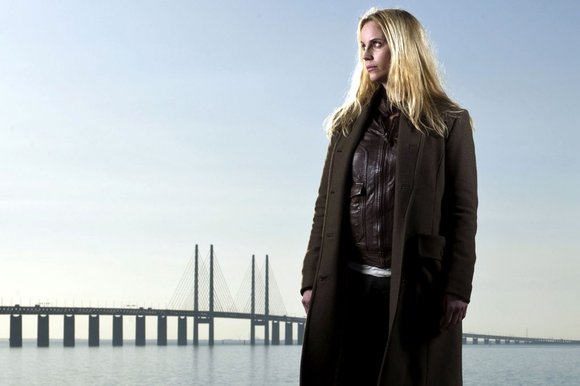
What I Talk About When I Talk About Reading

I’ve been thinking a lot about reading recently, after a reading fest on holiday over Christmas in which I chewed my way through four novels and finished off a fifth. You could say I’m a voracious reader, but I’m not. I used to be.

A phenomenon of recent years for me has been the loss of my reading ‘mojo’ – in times of stress I’ve found I lose my ability to concentrate on anything longer than a magazine article, or even a tweet. Novels are completely out of the question. The first time it happened to me I was really scared. All my life I’ve chain-read books – probably from the moment I discovered Enid Blyton’s Mallory Towers I’ve had a book on the go, and my heaving bookshelves are testament to it. My heaving bookshelves are also a testament to how much reading I did through the nineties and noughties – there is a definite tail-off in the tenties and I blame the recurring loss of my Reading Mojo.

When, after that first episode, my RM returned I whooped for joy. Oh thank goodness. It was on holiday and I’d taken a few novels with me, just in case. Discovering Japanese author Haruki Murakami was the greatest joy – you could never experience the surreal world he creates with words in a movie or a TV show, which is what I’d turned to in a book-less world. I’d also taken Fifty Shades of Grey, which I have to say, with its terrible, laughable writing and implausible plotting, made me race through a novel in record time. So much so I wished I’d taken books two and three on holiday with me to feed the reawakening beast of my RM. At that time, E L James’s trilogy wasn’t a global phenomenon so I sat reading it in the hotel and on the beach in Turkey, the only one unashamedly brandishing the grey cover in public.

Straight after that holiday, the RM disappeared again but I realised what was causing it. The twin troubles of work/life stress and the distraction of social media. I knew that as soon as I prepared to read a novel in bed, I’d be checking my phone instead. I switched to reading an online newspaper which gave me the short bursts of reading material I could handle. I started to enjoy the writing of great journalists, especially female ones, and got into intelligent TV series like Breaking BadHouse of Cards or The Bridge. I could consume no end of ‘content’ but the desire for it stopped short of novels or narrative non fiction because they took too long to consume. I wanted my content fast and immediate.

Having once been an advocate of e-reading – I set up a digital list in my former job and believed that the whole world would go ‘e’ in a matter of years – reading e-books just didn’t do it for my mojo. Something was lost from the experience of reading Richard Burton’s diaries that I knew would come from having the book in my hands, continually turning to the cover image, the plate-section images or the back-cover copy, to supplement the world I was entering. I read about half before leaving it alone. It’s still unfinished.

I know lots of people who only read on Kindles and they tend to be the really voracious ones, who always have to be reading something. For me, it’s not just the act of taking in words from a page or a screen, it’s an immersive thing where exactly the right book has to be chosen, the physical setting around me has to be perfect and I have to be extremely comfortable. I can’t just sit on the sofa at home reading anything – I get bored and it’s not the most comfortable thing for me (my neck hurts). Rarely does a book capture me so much that I would sit on the sofa reading. Even now, writing this, I’ve left my current book, The Post Office Girl by Stefan Zweig, on my bedside table, preferring to sit with my laptop on the sofa while I contemplate what I’ve just done – lain in my warm bed with coffee for a couple of hours reading. Quietly. No distractions.

It’s such a rare thing that the RM keeps going after a holiday that I almost want to run around shouting for joy. I have to be careful about what I read next so I don’t scare it away again. Zweig is a master of storytelling and it is this that propels me on, as well as the joy of discovering his post-World War One Austrian world. I’ve always found foreign locations a really big reading-mojo turn-on.

I rarely read a novel that is based in the UK –  I mainly gravitate towards exotic locations and ‘other’ experiences and UK-based ones are too familiar. I credit Gabriel Garcia Marquez with this gravitation, as he was the start of my lifelong love of Latin American writing and magical realism. His death is the only author’s I’ve ever actually cried over. I credit him with changing the way my brain works in my late teens, with Love in the Time of Cholera. Since then, I’ve chewed through them all: Allende, Esquivel, Llosa, the more recent Junot Diaz, and Irish author Niall Williams who writes in the same tradition. My current passion for the surreal realism of Murakami fits with this trend of loving stories of ordinary life in exotic locations that are tinged with magic and the unexpected. I want my life to reflect all of those things.

And then there’s my passion for travel writing. I love joining an author – my favourite is Paul Theroux (Louis’ dad) – as he sets out on a journey into the unknown. I travel in my mind with them, every step of the way, and I’m overcome with post-holiday blues when the books end. Because men are more easily able to travel alone, most of the writers I read are single and male and I long for their unfettered freedom. I think that’s why I find them really enticing, and why I loved Cheryl Strayed’s Wild so much. She entered that realm and as a woman, she is a rare thing.

Shantaram by Gregory David Roberts is probably my favourite cross-breed of writing – a true story ‘enhanced’ by the author with unexpected and extraordinary events. I don’t care that he’s embellished the story of his time in India – it’s still one of the best books I’ve ever read, and at one thousand pages long, I was surprised when I still didn’t want it to end.

With the recent return of my reading mojo, I was reminded how lucky I am to be able to access the world of writing when I learned that former model Alicia Douvall has only just learned the alphabet. In her mid-thirties. She appeared on Celebrity Big Brother (I watch crap TV when I’m not reading) and admitted that letters and shapes were new to her world. I can’t imagine a scenario where I wasn’t able to become immersed in the world that an author has created and I realised that it is a privilege. Whether it’s a journey, a magically enhanced world or a brilliant bit of social history, all of these things change the way my brain works and make me see the world in subtly different ways. Reading someone like Zweig, you realise you’re accessing the brain of someone who lives 100 years ago in post-Archduke Ferdinand Austria. How else could you do that? No amount of movies or TV is going to give you that unique insight into another human.

So for now, the Reading Mojo is back and I am grateful. Long live the Reading Mojo.

The Enlightenment

Yesterday was a day that featured both the demise of Page Three in The Sun (unconfirmed) and a celebrity reality TV show featuring at least two former glamour models. Four of the female houseguests have had cosmetic surgery (five if you count the one that left earlier in the week) and one of them has had eighteen boob jobs and umpteen attempts to make herself look like Barbie with cosmetic surgery.

Call me a genius, but it doesn’t take much to see that there’s a connecting story here. I watched with horror as Alicia Douvall – she of the eighteen boob jobs – recounted that she’d only just learned ‘letters and shapes’ with her three-year-old daughter and that all that mattered to her was having great ‘tits’ and to be ‘fuckable’ to men. Oh dear god.

A male Twitter follower seemed surprised when he observed that Alicia’s self-esteem was clearly tied to being desirable to men. Well, yeah. Don’t men know that most straight women tie their self-esteem to being desirable to men from an early age and that we are encouraged to do so for the rest of our lives? It seems they don’t, and I am surrounded by well-meaning men of all ages who tell me that this sort of thing doesn’t exist. They genuinely don’t see it. They’re not in a world where it matters how fuckable they are but they constantly rate women on how desirable they are. It’s the Way Things Are.

I grew up in a household where The Sun and Titbits were the main sources of reading material. A typical ’70s upbringing involved watching Miss World with your dad, and all voting on the ones you thought were the prettiest ladies, commenting on their hips, their boobs, their hair. I loved it. I thought about which one of dance troupe Legs & Co I’d like to be when I grew up (Cherry Gillespie) and I looked at the Page 3 girls and hoped I’d look like Linda Lusardi when I was older. I blushed when various family members and friends would comment on my body – no part of it was left unscrutinised by the people that surrounded me, male and female. I’d say that started around the age of eight.

Even before her death in her 70s, my mum would still comment on my clothes, body, hair or face whenever I saw her. It was like a default setting and it is still a really common first point of conversation between women. You often get ‘nice hair’ or ‘did you lose weight?’ before you’re asked about your Actual Life. I now make a point of only saying stuff like that once all the important things are out of the way, but I still say it, mainly because I know it will boost the confidence of the woman hearing it.

In my twenties and thirties, once my crippling body-image problems had left me (go figure) I just got used to the running commentary on my appearance and I enjoyed the ‘game’ of being attractive to men. Like many young women, I looked for constant affirmation and got it from friends and passing strangers. I got a kick out of looking good and being sexually attractive. It was fun. It is fun. Losing a significant amount of weight in my late thirties gave me another confidence boost and the attention I got rocketed. I thrived on it for years.

It’s only recently, having done all the man-pleasing sexy dresses, heels and lingerie things, that I’ve realised what I was doing. And why I so don’t need to do it now. I don’t need male attention, approval or commentary to exist. Much of the commentary is designed to objectify you and confirm a sense of entitlement to your body, and it’s no longer something I would seek out.

I wonder if this sort of enlightenment only happens when you hit a certain age, and this is the reason why there is often a tension between younger and older women on the subject. Hearing Katie Hopkins and Michelle Visage suggest to Alicia Douvall in the Big Brother house that she could try just being herself, without the tits, seemed to demonstrate that nicely.

Often, young women (and men) hit back and accuse older women of being ugly, undesirable and just plain jealous of them. What if we can see what you’re doing and just want you to make you aware of what’s happening to you? In their desire to become sexually desirable both Alicia and Katie Price wrecked perfectly beautiful young faces and bodies. That, in my view, is a damn shame.

I think young women aspire to be Page Three models because it empowers them in a world where their primary currency is sexual desirability. I really am all for women owning their sexuality – god knows I do – and having the right to take an active part in the free expression of it, but I’d just like them to know the context in which they are doing it. Their bodies are the primary expression of womanhood in a national newspaper that is being viewed by eight-year-old Lisas who aspire to be them, and learn that their only currency is youth, beauty (in a narrowly defined sense) and sex. They should know that in the same newspaper, women are vilified for being as sexually active as men. The only acceptable face of womanhood is a meek, static, exposed one on Page Three.

By all means, be part of a world where female sexuality is celebrated in all its diversity – be part of the tribe of women who make money from their bodies in webcam accounts, table dancing, erotic imagery and female-friendly porn. Just know that this is a world where we are objectified and forced to fit a stereotype from an early age. Ask yourself if what you are doing is a free expression of your sexuality and the body you were born with.

Just ask the question.


Wild Women

This week, I wanted to write something in response to seeing Cheryl Strayed’s memoir Wild on the big screen, brought to life by Reese Witherspoon. More than any other book I’ve read, this story has resonated so much with me that I can’t believe someone has lived it and told it. I first heard the author reading it out loud on the radio and I was transfixed by it. Who was this woman singing my life with her words?

In her twenties, Cheryl set off on a journey of self-destruction, sleeping around and taking heroin, until she didn’t recognise herself. She cheated on her loving husband. When her mother died suddenly at 45 of cancer, she divorced her husband and decided to become the woman she told her mother she would be. She began with a baptismal trek through the wilderness – a 1,1000-mile hike along the US’s Pacific Crest Trail.

Now I’ve never done heroin (or any other hard drug for that matter) but I know what it is to walk out on a husband who is a nice guy, a safe pair of hands, and step out into the unknown. Something compels you to go and much of that has to do with living a life that your mother hoped you would live, or the one you think she wanted for you. For women in particular, it is a baton that gets passed on from generation to generation, even if they never vocalise it during a lifetime. There is an understanding that somehow you will improve on the life of the woman that created you, and that it is your duty to do so.

There is a point in the movie when Cheryl snarkily tells her mother,“I’m just so much more sophisticated than you were at my age.” Her mother retorts that that was always the plan. We constantly see ourselves reflected back and forth between generations of women, and although I’ve never had the privilege of having a daughter of my own, I feel the same way about my friends’ daughters, or young women among my group of friends.

It is always the plan. I know my mother wanted more for me than she had had herself, professionally, romantically, economically and everything-ally. And I have spent my life trying to make that happen, especially since she died sixteen years ago.

For me, the grieving for her mother in the movie was the note that struck home. In a series of flashbacks, we see Cheryl’s vibrant, playful mother, played by Laura Dern, making a life for herself and her children away from an abusive husband. She is a woman who decides to go to college at the same time as her daughter (the college runs a special mother-daughter scheme), and who sees herself as a mother first and foremost, an independent woman second. She passes the baton to Cheryl, who puts herself through an independence right-of-passage, on the infamous PCT.

My mother was an exceptionally bright woman who couldn’t go to college because the Second World War got in the way. She entered into a very happy marriage with a man she loved, but I could always tell she wanted to see me get more out of life than just being a housewife with kids. When I finally tore myself away from the family home at twenty-two to go to college, she vicariously shared in my academic and subsequent professional success every step of the way. I always felt as though every A* grade or job offer was a gift for her and in many ways, I’m still offering her my personal achievements. I think she’d have liked this blog.

The grief for her passing hit me like a steam train. I’ll never forget how physical it was – I felt as though a boulder had been strapped to my chest. I suddenly realised the real meaning behind getting things ‘off your chest.’ It sat there, pressing down on me, unwilling to move. For days I found I didn’t cry – I just moved around in a fug, unable to really grasp what had happened. My sister and I threw ourselves into the paperwork and logistics of sorting out a funeral – I still think all that stuff is put there deliberately just to keep you busy.

I remember going into her local supermarket in Wales a few days later, just to pick up a few things. I suddenly had a flashback of her standing there, holding a basket with a few strange things in it. A tin of salmon, a carton of yoghurt. That’s when the grief got me.

Cheryl Strayed had her moment on top of a mountain, as she watched her walking boots bouncing away down the side of it during a rest stop. She was left to construct some shoes to walk to the next town in, out of duct tape and a pair of sandals. But she carried on.

And this will sound like a cliché, but someone once told me clichés are there because they’re true. We are all wearing our mother’s shoes but at some point we have to construct a new pair of our own to walk in.


Flying Solo

Well here I am, back to the central concept of my blog – literally flying solo from Sharm El Sheikh in Egypt, at the end of another glorious holiday on my own.

I’ve got the routine down pat. From that first holiday in Thailand (see my very first post – Consciously Uncoupling) where I spent days feeling sorry for myself in an exotic location, I’m now a veteran of the experience, knowing how to play it, how to pace my time and how to react when people question me about it.

Today I got questioned by one of the hotel’s numerous managers: he had thought that by reading my book alone on the beach that I didn’t like the hotel. Nothing could be further from the truth – feeling relaxed enough to do that on day one is pretty much my personal seal of approval. Why is reading alone seen as such an antisocial activity? This came on the heels of another hotel employee asking me why I was reading rather than relaxing – to him the two were very definitely exclusive – and later I was told that all the staff thought I was a doctor because I was wearing glasses and reading books. Wherever I go I am known as the ‘lady with book’ – people seem genuinely surprised that I read.

But like many solo travellers, the book is my travelling companion, my security blanket, my go-to item when I’m plunged into an unfamiliar setting. I can quickly immerse myself in a fictional (or non-fictional) world when I’m surrounded by couples and families on the beach, at dinner in a crowded restaurant, in a coffee shop filled with Egyptians or Turks. When a book is with me, I have a bubble to escape into, and I zone out all of the noise and activity around me. It’s so much more than ‘just a thing to do with your hands’ when you’re on your own.

I tend to punctuate my time on holiday by booking a few trips – this time to the White Canyon in Nuweiba (where you have to haul yourself out by a rope!) and a submarine trip to see fish on Napoleon Reef (I don’t swim). This is a great way of meeting new people, especially if you’re thrust into potentially life-threatening situations, as in the canyon.

What thrilled me on that trip was seeing an Egyptian couple bring along their one-year-old (beautiful Maryam) and entrust her safety completely to the guide. For most of the walk/climb through the canyon, he held her on his shoulders and she slept with her head on his. He even took her with him when he climbed out of the canyon using only the rope. The parents were mildly anxious, but not freaking out, as I would have been. It made me think about challenges and scary things, and how they’re not so scary when you get up close to them. That guide held out his strong dark hand every time I exclaimed, “I’m scared!”, and pulled me up over a boulder or tricky climb. I kept thinking, ‘well if he can do it with a baby on his head…’

The first time I came to Egypt I was scared. Of the people, my perception of the culture and religion, the language. Everything. It didn’t help that a Dahab shopkeeper spiked my tea when I went into his shop – I literally ran out and off to the hotel shuttle bus, vowing never to go back again. But I’ve gone back again and I’ve laughed at how normal it all seems because I’m not seeing it all through the veil of scariness. I walked past his shop, at night this time, and stopped to talk to other shopkeepers who’ve simply sold me something without hassling me (although the non-hassling ones are few and far between – I make a point of going into their shops. By the way, I don’t think that shopkeeper intended to drug me – the tea had a mildly fuzzing effect that was probably intended to relax me into more shopping. He looked genuinely surprised when I ran out.)

That first time in Dahab town, I swathed myself in a long dress and scarf around my head, so as not to ‘stand out’. No wonder I was hassled. This time I noticed Egyptian girls (I didn’t see many women over 30) running around in jeans and jackets, hair streaming free. However, the best moment was spotting a convoy of Muslim girls on quad bikes heading into the desert, in full headgear. You go, girls.

From the Bedouin guy next to the hotel selling me Turkish coffee and giving me some bread to help him feed the birds in his tent, to the guy selling me boat trips, it didn’t take long before I stopped thinking these people were just after me for something. Of course, they’re selling their wares, but both guys took time to chat to me, to tell me about their lives and make me feel comfortable. Add to that the Egyptian couple in the canyon, who left an open invitation to their place in Cairo and emailed pictures they took of me wobbling and panicking up the canyon wall.

In many ways, the canyon trip represents the challenge of holidaying alone for me – I knew it would be beautiful-but-frightening. That I might fear for my life as I made my way through and wish I wasn’t there at all, but then smile heartily over a Sakara beer that night and feel my soul enriched by the experience. I would want to do it again. And I do.

This brings me on to an experience I call The Rollercoaster. Each and every holiday alone does not go to plan. I never end up doing what I think I’m going to be doing on any given day and I’ve learned to ride the rollercoaster, wherever it may take me. Four years ago, a terrible New Year’s Eve in Thailand led to a wonderful New Year’s Day, where I rode around Koh Samui on a bike, in between two Thai women who wanted to show me around. We eventually we went clubbing and had the time of our lives. I resolved then that NY Day is the new NY Eve.

The trick with The Rollercoaster is not to give up when things feel a bit grim. On your own at dinner one night? There’ll be a party invite the next, or an unexpected meeting with an old friend in a bar in town … or new one. Don’t expect anything and everything will happen in its own good time. It always does, and it’s just done it again. I love it. It’s life.

The other trick is not to rely on anyone else for your plans. I once met two Australian sisters in Phuket and they promised hand on heart to come back after their trip to Phi Phi to spend the last day of my holiday with me. I looked forward to it so much and they never showed. But I did end up meeting an Indian air stewardess in a bar and we went clubbing together, so all was not lost.

The Rollercoaster.

Part of me just wants to get on the waltzers, or even just the children’s spinning teacups, and have a nice ride round with no thrills or spills. But then the lure of the unseen horizons over the top of the rollercoaster’s peaks and loops are too much for me and I have to send myself there.

It’s always, always worth it.

(From Sharm El Sheikh airport, which really does need to get wifi)

Home Alone

Last year I decided to do Christmas alone in London. It felt right – like I could handle it. After three years of either being away on holiday or throwing myself into charity work for Crisis, I thought ‘I can do this’. I can be in my flat, on Christmas Day, on my own, and just be.

I planned it – I knew what the day would entail and I was really looking forward to it. I’d go for an early morning run; I’d make coffee and a hearty breakfast; I’d open my presents while watching something crap on TV, sitting next to my beautifully decorated tree. How hard could it be? I’d be seeing one of my friends whom I’d met at Crisis later that day, and enjoying a Christmas dinner with her and her flatmate. All good.

But oh my god. Those hours. Those long, long hours.

It really started going wrong on Christmas Eve. I’d left work full of seasonal joy (and prosecco) at around 4pm, slightly thinking that there might be a post-work pub moment. There wasn’t. Everyone went home. I went along to HMV and bought myself a boxset of something – can’t remember what. I went home, shrouded in increasing gloom.

Again, I’d thought there’d be some spontaneous socialising to be done back at the ranch – nothing doing. Everyone had, in the words of one neighbour, ‘fucked off for Christmas’. This is what people do (even though most of my local friends and neighbours are Jewish.)

But it was ok – I still had my plan and my dinner to go to.

It started so well – it was one of those crisp, sunny mornings and I ran a few laps of my local park saying ‘Merry Christmas!’ to passers-by who were walking dogs or hurrying to a family gathering. The endorphin rush got me through the next hour or so, as I made breakfast and slowly opened my presents.

I’d made a pact with myself not to look at social media, because I knew what I’d see – pictures of cosy Christmas family mayhem and drunken antics – but let’s face it, I broke the pact within a couple of hours.

I know what the reality of a family Christmas is because I’ve been there. The seasonal cheer lasts about four hours before the rows, the tears, the sniping, the wishing-I-was-anywhere-but-there feelings kick in, especially when they involve in-laws. But still, I believed the Facebook hype – that everyone was having the BEST time. Of course they’re bloody not.

To give myself credit, I lasted about four hours before giving in to the wallowing. My first mistake was ‘seeing no harm’ in opening one of my stack of prosecco bottles, just for a ‘glass or two’ over lunch. My second was to start watching an extremely romantic film that a friend had bought me on DVD for Christmas. There’s a reason why they don’t show these movies on Christmas Day – stick with the comedies, people.

Let’s just say that for the ensuing four hours after those mistakes were made, I descended into a pit of gloom so deep it resembled the Mines of Moria. It was like slowly dying and being reborn as I emerged from the pit at around 5pm, blinking, into the Christmas lights of my friend’s flat, and having a glass of champagne thrust into my hand. Little did the people I was with know, as I joined in laughing at the Morecambe & Wise Christmas Special and munching on pigs in blankets.

The memory of those few dark hours is enough to see me heading off on holiday this Christmas and New Year, alone, but not ‘doing Christmas’. I know I’ll be surrounded by ‘entertainment’ staff in the hotel, wearing Santa hats and trying to get me to be Christmassy but I’ll be relishing the non-Christianness of the location and reading a book on the beach. Why don’t the people in these hotels realise you’re there to get away from Christmas, not recreate it in their country?

I remember my first Christmas alone in Thailand, and a well-meaning couple who forced me to join them in a bar, because I ‘couldn’t be alone on Christmas Day’ – except I could and I wanted to be. Out there I was absolutely fine on my own – it was only other people’s perceptions that made me feel crap about it. And that was the year I had the worst New Year’s Eve EVER on my own, but the BEST New Year’s Day, on a motorbike in between two Thai women, touring round Koh Samui, followed by all-night clubbing.

That’s when I realised.

The real fun happens on the day when you least expect it.

———————————-

Secret solitude at Christmas:

http://www.theguardian.com/commentisfree/2014/dec/18/christmas-that-changed-me-secret-solitude

A Bar of One’s Own

One of the main topics on my ‘must blog about’ list for Because I Can has been the concept of drinking alone. Not just sitting on my sofa watching TV with a nice chilled Prosecco or Picpoul De Pinet in the fridge – actual Going Out To A Bar On My Own.

I’ve been doing it for around four years now, on and off, so it’s become part of normal life for me, but it still amazes some people when I mention it and I find myself explaining what I do, how I do it, and reliving all those moments in bars that happened on my way to normalising this activity for myself.

It all began back in the Camino bar near King’s Cross. I’d already separated from my husband and was hitting the after-work social scene quite hard. On the odd occasion, all of my friends were busy doing other things and I became frustrated that my social life depended on other people being available. Why did it have to be like that, I thought? If I want to go out, I should be able to go out, just as guys do, with a newspaper and a pint at the end of the bar. But as we all know, if a woman does that, an assumption is made that she is touting for business, and I don’t mean hoping a recruitment consultant will buy her a drink.

I became determined to try it out so one night I took a copy of the Evening Standard to Camino – a very busy after-work bar filled with ‘young professionals’. I was maybe pushing the age range up a bit just by walking in. I went to the bar, ordered a glass of wine, took a perch on a bar stool and studied my newspaper.

Nothing happened. No one stared, no one propositioned me, no one cared.

It felt amazingly liberating.

So I did it again. I found that sitting on a bar stool right next to the bar offered me the most ‘invisibility’. People assumed I was just waiting for someone, or at least just there temporarily. I took work with me, or read a book, and barely looked up at the people around me – it was just so easy to blend in. I enjoyed the look on guys’ faces as they saw me finish my drink and leave the bar. “Oh my god, she was actually on her own, not waiting for someone!” Ha.

Every now and again someone would notice me. Usually a woman. In a pub in Belsize Park one stood next to me at the bar and asked, “Are you here, alone?” Yes, I replied. She told me how much she admired me for it and promptly ordered me a glass of wine. I watched her go back to sit with her partner and they both looked at me admiringly as I grinned back. I loved it.

I haven’t always been looked at admiringly by women for doing this. I noticed that if I went to bars alone on holiday, as I did in Thailand on my first solo jaunt, I’d see a (usually British) couple in a corner, the woman glowering at me and the man looking impressed. I don’t know why these women felt annoyed by me being on my own but I have experienced it a few times.

Only this year in Turkey, an older British woman, with her more-impressed husband, told me she thought people who holidayed alone were “sad” and she “felt sorry for them.” As I left them sitting smugly on the beach to go shopping, I thought, “I’d rather be heading to a bar in Bodrum on my own than sitting next to you on a beach, love.”

Now it’s just part of my normal routine to take myself off to a pub now and again. After a hard day of meetings, I like nothing better than grabbing a copy of Grazia and ordering myself a glass of wine in my local pub. The bar staff know me and every now and again someone I know joins me. If they don’t, no biggie. I don’t need a wing person. I know lots of people who can’t go anywhere without one – going running, to a bar, shopping, on holiday – all of these things I do on my own. It’s uniquely liberating. Why wait for someone else to validate your activities when you can own them yourself?

Whilst going to a bar alone might shock some people, what about going to a club? I’ve done it, lots of times. In a busy environment like a club, no one knows you’re on your own. You may have become separated from your friends, you may have just arrived and are looking for them. No one notices. It’s easy to slip in, grab a drink, go for a dance and slip out again. Oh the joy.

I started doing it because my friends tended to end nights out earlier than I wanted to end them. We’d go out for a drink or a meal, and I’d be back in my flat at 9.30pm/10pm itching to carry the night on. I got so frustrated by it one night that I just thought, ‘fck it’ – I’m doing it. What would a guy do? He’d just go out and see who was there. So I did. About half the time I’ve done it, I’ve bumped into people I know. When I haven’t, I’ve survived it. Loved it, even. People are so caught up in their own bubbles that no one notices me: at the bar, on the dance floor, moving between rooms. I’m just a woman in a club, albeit older than the average. Do I care about that? No. And seemingly no one else does.

I haven’t done my club routine in a while because once I’d done it a few times I’d largely got it out of my system. It’s no longer a case of me feeling like I’m missing out on something when the evening ends ‘early’, it’s more that I know what’s out there should I want to take it further, and I can if I want to. The night is never over if I don’t want it to be and it’s not forbidden territory – it’s there for the taking if I want it.

Because I can.

Bond Woman

I’m rather proud of the fact that the very first movie I ever saw at the cinema was the Bond film, The Spy Who Loved Me. I’ve got older siblings and they often took me with them to see movies that were at the top end of the age range, me being only ten when that came out in 1977.

I loved the glamour and the adventure of it all. The exotic Egyptian location made me yearn for far-off places and while at the time I couldn’t see the point of the ‘sexy time’ between Bond and Russian agent Anya Amasova, I can now see that Barbara Bach’s intelligent, dynamic glamour became the blueprint for femininity for me and throughout my life, I’ve always fantasised about becoming a Bond girl.

Having retrospectively discovered that Bond isn’t exactly the most liberated of franchises, I’ve thought long and hard about my ultimate feminine fantasy and why I long to be Anya Amasova. It turns out that the movie was released during those turbulent years of the ‘second wave’ of feminism and it formed a bit of a watershed in terms of how Bond women were portrayed. In 1974, Britt Ekland had starred in The Man with the Golden Gun and by her own admission, the role she played was not based on intelligence or dynamism: “…we were all sex kittens … We are never called ‘Bond Women’ mind you, it’s still ‘Bond Girls’ but today they are much more sophisticated.”

Perhaps Ekland was the last of the ’60s throwback ‘Bond kittens’ before Barbara Bach came along in TSWLM – nothing kittenish about her. Spy‘s theme song, Nobody Does it Better by Carly Simon, did seems to suggest that Bond was still in charge, but Simon’s You’re So Vain history always makes me think that she meant it in a tongue-in-cheek ‘yes, of course you’re still wearing the trousers, darling’ way.

So fast-forward to 2014 and we’ve just heard that fifty-year old Monica Bellucci has been cast in the latest movie, Spectre, to be released next year. In a subsequent interview, she immediately corrects the ‘Bond girl’ moniker to ‘Bond woman’. Taking over where Honor Blackman left off as a 39-year-old ‘Pussy Galore ‘in Goldfinger (1964) she is the oldest Bond girl ever, and has been awarded the accolade of having a non-innuendo name in the movie, Lucia Sciarra. How far we have come.

I’m delighted that the older woman has been recognised as a box-office worthy attraction, even if it is within a film franchise that is notable for its objectification of women, to the point where they are often disposed of halfway through the movie. (I remember going to an office Christmas party where the theme was ‘Bond’, and one of my female colleagues going as the Expendable Blonde’, complete with fake bullet hole in the head. Brilliant.)

Because as a woman only a few years younger than Ms Bellucci I am only too aware of the invisibility of women in mainstream media once they reach a certain age, especially in movies. As Kristin Scott Thomas has said: “I’m still asked to do leading roles in France, never in the UK. Never ever. People will ask me why, and I don’t really know apart from this idea that in France people are less afraid of older women, or getting old … In England, you have the feeling that with women after 50 you don’t have sexuality any more, or if you have sexuality you are a nymphomaniac.”

Women like Madonna, who ‘ostentatiously’ continue to celebrate their sexuality beyond fifty are constantly vilified in the media. She is the oldest trope in the book – the ‘mutton dressed as lamb’ hag who entraps young men into her web of hysterical sexuality. I agree with Kristin that the sexual prime of the older woman is frightening – people don’t know what to do with it and like to label you as a ‘cougar’, a she-wolf predator who needs to sate her freakish desires.

Here’s a thought: maybe we’re at the top of our game and because it’s so damn powerful society has to come up with a range of monstrous myths to keep it on the down low. Can’t have those pesky women being all in our faces when they’ve got no right to be there, sexually, professionally, economically or politically. Let’s make fun of their attempts to present their sexuality, intelligence and authority in public so that they shrink back and don’t bother us again.

And how I love Madonna for never doing that. As Helen Mirren said of her: “I think Madonna got it right. Madonna claimed [her sexuality] for herself, and I’ve always admired her for that. I loved that sex book she did, I thought it was fantastic, because it was a big two fingers up. ‘This is my sexuality, it’s not what you put on me, it’s mine.'” She’s just got her body out again, this time in Interview magazine, and whilst I do have issues around why women are constantly needing to do this to make a point about their sexuality (see my Over-Baring post) I kind of love that she has. Never disappear, Madonna.

My experience of becoming an older woman is one of increasing sexual power, and society’s increasing fear of it. I know that lots of men love it, and want to experience it – many friends my age have reported a recent upsurge in ‘interest’ from younger men – but they are often keen to keep their interest a secret, as though it is something freakish within them they can never admit to. For many men my own age and older, a woman like me is a threat to the power ratio, especially if they happen to come with a good job and a salary. There’s a reason why this is the demographic most prone to vilify older women. Ladies and gentlemen, look no further than AA Gill.

So, go Monica, go. I know you’re in a movie purely because of your astonishing beauty and sexual power, but you are fifty, and never before have those three things been seen as a positive. As someone not far off fifty and fearing the inevitable ‘cloak of invisibility’ descending, I can’t wait to see you up there on screen giving 46-year-old Daniel Craig the runaround.

In reality, he’d be trying to behave as though you didn’t exist.

————————————–

http://www.independent.co.uk/news/people/monica-bellucci-inside-the-world-of-the-bond-girl-italian-siren-and-dolce-and-gabbana-muse-9906994.html

http://www.telegraph.co.uk/culture/film/starsandstories/9959989/Kristin-Scott-Thomas-The-French-are-less-afraid-of-older-women.html

http://www.telegraph.co.uk/women/womens-life/11267514/Madonna-topless-photos-are-a-triumph-for-women.html

http://www.thedailybeast.com/articles/2014/12/05/spectre-casts-50-year-old-bond-girl-for-007-to-do-sex-to.html

Home Land

Having never been a huge fan of crime or murder-mystery series’ on TV, I’ve recently found myself addicted to a certain number of them, to the point where I’ve binge-watched them over a number of weeks, leaving my LoveFilm movies to one side as I complete each season. It started with Danish crime series The Bridge, and my girl-crush on lead character Saga Norén, then Sarah Lund in another Scandi-drama, The Killing, and now Carrie Mathison in Homeland. (I’m probably soon to start obsessing over Stella Gibson in The Fall or Gro Grønnegaard in The Legacy.)

I’ve always preferred human stories over complicated whodunnit plotlines so I’ve followed the stories of these women as they’ve led missions to solve crimes and track down villains, not really caring about the superficial plotline, but definitely caring about what happens to them and why they’re doing what they do.

A number of identifying characteristics binds them all and I’m finding it fascinating as to why this is a trend in crime dramas – the rise of the brilliant, yet unstable, often mentally challenged, highly independent professional woman who doesn’t give a toss about family or having children. To all intents and purposes, this is the new version of the maverick, swaggering, ‘fuck you’ trope of the ’70s and ’80s crime dramas, epitomised in male-led cop shows like Cracker or The Sweeney and parodied by Gene Hunt in Life on Mars.

These women walk into bars and pick up guys, they drink too much and they neglect their progeny. They’re brilliant at their jobs but they have trouble interacting socially and are prone to say what they think, even if it’s inappropriate. They’re sometimes highly autistic or bipolar, needing medication to manage their mental state, along with wine. They can’t be bothered wearing makeup or man-pleasing clothes – they simply get clean t-shirts out of their desks or pull on frumpy jumpers and badly fitting trouser suits instead. Who gives a f*ck about appearance when there’s a job to be done?!

I’ve been thinking a lot about this development, and wondering if it’s a bad thing that these brilliant women are being portrayed as child-resistant ‘unnaturals’. Are we meant to celebrate their inhabiting of the lone-wolf space, previously taken up by family-avoiding male detectives, or are we criticising their refuting of domestic bliss for the joy of job satisfaction? The trend has its roots in earlier cop dramas like Prime Suspect and Cagney and Lacey – Jane Tennison and Chris Cagney were allowed to exist outside the domestic space but it was one they at least tried to access. These new women are not even considering it – if anything, human relationships are secondary to their professional ones in a way that has stereotypically been associated with men for decades.

If we’re meant to be critical of these women, then I’m not feeling it. I’m watching these shows precisely because they outline the concept of female independence so clearly. The recent crop of them shows that there is a huge audience fascination with these ladies, and it can’t just be women watching them. I have to admit that my first thought on watching The Bridge was, “typical – to be a successful, non-familial woman in a male-dominated space on TV, you have to be somewhere high up on the autistic spectrum, and your lack of maternal instinct viewed as nothing short of freakish.” Then, as the number of these high-functioning women appearing on my TV screen grew, I started to think that this trend is nothing short of a revolution in female roles both on- and off-screen. Yes, the characters are flawed in ways that fascinate us, but we don’t judge them for non-conformity.

What’s most interesting is that when Skyler White first graced our screens in Breaking Bad, pregnant and desperately trying to hold together a picture of domestic bliss and familial normality, social media exploded in direct criticism of her actions, as though she was somehow spoiling her husband’s maverick crystal-meth-making fun. Even the actress that played her was vilified for the part she played in trying to keep her family together, trying to make her husband conform.

So bring on Stella and Gro because I can’t get enough of these indie women. The plotlines of these series are just a sideshow to the real story – women are dominating our screens in ways we’ve never seen before and I love it. This winter I’ll be swishing around in a military greatcoat (which I’ve had for years, actually) and DM boots, pretending I’m Saga, solving crimes in Denmark, eschewing makeup and letting my hair dry naturally as I stride into the office.

I might stop short of changing my t-shirt in the office in front of everyone, though.

I don’t think we’re ready for that just yet.


Anniversary

Today would’ve been my twelfth wedding anniversary – I got married in 2002 in a small Scottish castle hotel on a crisp, beautiful November day. There were kilts, a ceilidh, fireworks, friends and family. It still ranks as one of the best days of my life, even though the purpose of it has gone away. In many ways, it was a brilliant party that just happened to have a wedding attached to it – I thought so then, and even more so now.

I’ve often wondered why I felt such a strong urge to get married – I pride myself on not following the usual rules of behaviour –but there I was pursuing this goal because it was just ‘what you did’. All my friends had done it or were doing it, and I just had to tick that box. I decided that it had to happen before I was ‘too old’ to go down the aisle, and that thirty-five was my cut-off point. 2002 was my thirty-fifth year.

I knew it wasn’t quite right from the start and yet I pursued it relentlessly. I was the one who asked him to marry me, I was the one who made it all happen, even though he was extremely stressed with work in the year of our marriage and wanted to delay things. I just thought it was procrastination, but in retrospect, maybe he knew it wasn’t right either.

We did it anyway, and it was a huge and wonderful party for about seventy of our friends and family. Neither of us had big families, especially as my parents had died and he’d lost his dad, so there were ‘missing places’ at the wedding that we filled with friends and other loved ones. I made a speech (because of the missing persons), I took myself down the aisle, I arranged the whole thing. I even made myself stay on my own in the hotel the night before, not surrounded by friends and family, and actually a bit scared in the allegedly haunted room. This was all while he enjoyed his last night of freedom with his family and best man back in the village. What was I trying to prove? How alone I could be? I stayed awake pretty much all night.

I knew it was the wrong decision back then, I knew it was wrong on the honeymoon, and I knew for the next eight years. And yet I did it anyway. I know many people – men and women – who’ve admitted to me that they’ve done the same thing and are just going through with it, especially if they have children. It’s really scary, even considering leaving a marriage, and it took me time to gain the courage, and crucially the financial independence, to be able to do it.

When I finally did it, it was so sad. By doing what I’d done over the years, and his going along with it, we’d both lived inauthentic lives and it was time to face reality, in our forties. Essentially, we had been great friends who’d lived a great life, filled with adventure holidays, starter homes, dinner parties and burgeoning careers. There was much to be thankful for and the more distance I get on it all, the more I appreciate it for what it was, and him for what he added to my life. Thank you, if by chance you ever read this. (And by the way, I still can’t watch Out of Africa…)

What I’ve learned from it all is that your gut instinct is entirely correct, every time, in every circumstance. If your heart isn’t in something, your brain and gut know it and they tell you. You must listen to them, because they will steer you correctly through life. I’ve ignored mine in both professional and private life and it’s cost me. I suppose this mistake-making is all part of life experience and everyone does this. If only we’d listen to ourselves earlier in our lives and trust in what we hear. That so rarely happens.

I’ve applied the rule of Gut Instinct to quite a few things now – I only buy clothes if I absolutely LOVE them. Anything less, I know I’ll end up going off them and they’ll be given to charity. I only accept invitations to things I REALLY want to go to, rather than do things because I think I should, or because ‘everyone else’ is going. I only maintain friendships with people who truly add something good to my life and at the first sign of toxicity, back away fast, rather than labour away on something worthless.

The downside is that I often trust an initial feeling about something or someone and back away too quickly, making an ‘insta-decision’ that is so typically too-fast of me. I now catch myself doing it and make myself slow down to really look at the thing or the person, just to see if I’m missing something, if I’m being too hasty. This is the sort of thing I do when I visit new countries (see my Kaleidoscope Effect post) – I go there with all my preconceptions and first impressions and then wait for the reality to reveal itself.

It’s fun, waiting to be disproved about something, because you know, your gut instinct is usually telling you there’s something in there worth waiting for.

Over-baring

Since I’ve got back from the Middle East, I’ve been struggling a bit over what to say about the current slew of female celebrities getting their kit off, Because They Can, in various publications. I rather enjoyed being in a culture where both men and women cover up out of respect for each other, and started to think a lot about why we are so hellbent in the west on getting so much of our flesh out in public.

I’ve already said what I think about ‘The Fappening’, and 4Chan’s privacy violation against female celebrities, in my blog post In Support of J-Law. Everyone has the right to take nude pictures of themselves and a right to keep them private. But in the last fortnight, we’ve had two women (weirdly both of them with the initials KK), both at massively opposing ends of the bodily spectrum, determined to bare all in the name of womanhood and freedom of self-expression.

Why?

Firstly Keira Knightley appeared in Interview magazine, photographed by Patrick Demarchelier, in a series of images in which her body remains unmanipulated by the media. No photoshop, no cleavage enhancement, just as she is. Then Kim Kardashian appeared in Paper magazine, in a series of oiled-up nekkid shots that were intended to ‘break the internet’. Which they almost did, especially with the ensuing parody versions.

I happen to think that both of these women are remarkably beautiful in remarkably opposing ways. I think it’s a shame that Kim has clearly decided to enhance her best-known feature with surgery, but as someone with a pair of womanly hips and a small waist, I feel like this is a world where I can finally get them out with pride. And then Keira – seemingly no work done there, but she is campaigning against the ‘digital surgery’ that often makes her more acceptably womanly on film posters or in fashion features. One woman is flaunting her curves in extreme public displays, the other campaigning against the faking of curves whenever she is put on public display.

Interesting, isn’t it?

It’s also made me think about Lena Dunham, and her ‘I’ve got my body out and I don’t care if you don’t approve of it’ scenes in the TV series Girls. Her physically and digitally unenhanced body, seen in a number of nude scenes in the show, has attracted a raft of criticism from men and women alike, but that’s her point. Why should she look like Kim or Keira when she is really Lena? And who is dictating these rules?

In many ways I applaud all of these women for putting it out there – Kim looks gloriously (and uncharacteristically) happy in her images; Keira is poutingly defiant, and Lena acts care-free and unconscious of society’s disapproving gaze. Well done, you, I think, but then wondering why the hell they had to go that far to make their points. I’ve often laughed with guy-friends about their tick-box lists of female celebrity tits and ass – how the urge to see every hot woman naked in order to ‘tick them off the list’ became a thing that they did, consciously or unconsciously. It’s the infantile thing that Seth Macfarlane’s ill-advised Oscars song, We Saw Your Boobs, seemed to sum up perfectly, to the horror of the women in the audience.

Did these women bare all just to finally get the guys, and the media, off their backs? Once they’ve bared everything, does it mean they’ll be hounded less by the 4chans of this world, who’ve already moved on to the next starlet? What is it about the forced uncovering of women that makes female celebrities decide to do it themselves, so that they can control the outcome? Is it empowering or is it the ultimate sacrificial gift to the media that is hounding them already?

I realise I’m asking lots of questions here and not really answering them. I do think that there is great power in remaining clothed, in holding something back from the world (but only when that holding back is unenforced). I’m clearly part of a zeitgeist for women who are ‘baring all’ in terms of their experience (including Lena Dunham) but is that really the best thing to do? I have already said that part of the reason I am putting it all out there is because no one will be able to use anything against me in the future. There are no secrets for them to pounce on. Isn’t that what Kim, Keira and Lena are doing? All of us are owning our bodies and our lives but in the process we are letting everyone else have a piece of them too. It appears to be the domain of the modern woman. I’m all for having a voice that is heard, but are we saying too much?

It’s interesting that in the same period as the double KK bare-all, Nick Jonas, the erstwhile virginal member of the pop group the Jonas Brothers, did a Wahlberg-alike photoshoot for Flaunt magazine in his pants. The story registered as a medium-sized blip on the radar of various gay and women’s interest websites, and yeah, I had a look. He’s hot. But he’s one guy in a sea of a bajillion women doing this sort of shoot every day, for lads’ mags, for Page 3, for the latest ‘it’ magazine that promises them not to enhance their boobs and make nudity ‘arty’. We’ve moved on from Jonas already. Who cares if a guy takes his top off?

For women, holding back and wearing more might be the ultimate empowering thing to do with just a glimpse of a bared shoulder or ankle, but would you do that if you knew that your private bare-all photos made for your partner were likely to be posted online the very next day, rendering your peekaboo clothed pictures ridiculous? If you knew that the latest celeb magazine was going to show a range of high-definition images of you in a bikini on your holiday on its front page, and a close-up of your face without makeup, would you grin and bear it or rush out a series of naked, no makeup shots taken by a top photographer for a cool magazine?

I think I’d want to own my own images if I knew that these were the rules of the game, so I can’t blame the two KKs for doing what they’re doing. Kim K knows that her greatest social currency is her body and she is setting the bar higher and higher for how much she’ll show us, and how far she’ll go to enhance it. Many will say that they’re not interested in her antics, but I bet they have a good look before dismissing them.

As I write this piece, Gemma Collins, ‘star’ of reality TV show The Only Way is Essex, leaves the I’m a Celebrity Get Me Out of Here jungle to a tidal wave of fat-shaming tweets. When the ‘bikini shower scene’ becomes a woman’s main social currency on TV, and she’s pitted against ex-model and lads’ mag favourite Melanie Sykes, I’d be out of there too.