Bond Woman

I’m rather proud of the fact that the very first movie I ever saw at the cinema was the Bond film, The Spy Who Loved Me. I’ve got older siblings and they often took me with them to see movies that were at the top end of the age range, me being only ten when that came out in 1977.

I loved the glamour and the adventure of it all. The exotic Egyptian location made me yearn for far-off places and while at the time I couldn’t see the point of the ‘sexy time’ between Bond and Russian agent Anya Amasova, I can now see that Barbara Bach’s intelligent, dynamic glamour became the blueprint for femininity for me and throughout my life, I’ve always fantasised about becoming a Bond girl.

Having retrospectively discovered that Bond isn’t exactly the most liberated of franchises, I’ve thought long and hard about my ultimate feminine fantasy and why I long to be Anya Amasova. It turns out that the movie was released during those turbulent years of the ‘second wave’ of feminism and it formed a bit of a watershed in terms of how Bond women were portrayed. In 1974, Britt Ekland had starred in The Man with the Golden Gun and by her own admission, the role she played was not based on intelligence or dynamism: “…we were all sex kittens … We are never called ‘Bond Women’ mind you, it’s still ‘Bond Girls’ but today they are much more sophisticated.”

Perhaps Ekland was the last of the ’60s throwback ‘Bond kittens’ before Barbara Bach came along in TSWLM – nothing kittenish about her. Spy‘s theme song, Nobody Does it Better by Carly Simon, did seems to suggest that Bond was still in charge, but Simon’s You’re So Vain history always makes me think that she meant it in a tongue-in-cheek ‘yes, of course you’re still wearing the trousers, darling’ way.

So fast-forward to 2014 and we’ve just heard that fifty-year old Monica Bellucci has been cast in the latest movie, Spectre, to be released next year. In a subsequent interview, she immediately corrects the ‘Bond girl’ moniker to ‘Bond woman’. Taking over where Honor Blackman left off as a 39-year-old ‘Pussy Galore ‘in Goldfinger (1964) she is the oldest Bond girl ever, and has been awarded the accolade of having a non-innuendo name in the movie, Lucia Sciarra. How far we have come.

I’m delighted that the older woman has been recognised as a box-office worthy attraction, even if it is within a film franchise that is notable for its objectification of women, to the point where they are often disposed of halfway through the movie. (I remember going to an office Christmas party where the theme was ‘Bond’, and one of my female colleagues going as the Expendable Blonde’, complete with fake bullet hole in the head. Brilliant.)

Because as a woman only a few years younger than Ms Bellucci I am only too aware of the invisibility of women in mainstream media once they reach a certain age, especially in movies. As Kristin Scott Thomas has said: “I’m still asked to do leading roles in France, never in the UK. Never ever. People will ask me why, and I don’t really know apart from this idea that in France people are less afraid of older women, or getting old … In England, you have the feeling that with women after 50 you don’t have sexuality any more, or if you have sexuality you are a nymphomaniac.”

Women like Madonna, who ‘ostentatiously’ continue to celebrate their sexuality beyond fifty are constantly vilified in the media. She is the oldest trope in the book – the ‘mutton dressed as lamb’ hag who entraps young men into her web of hysterical sexuality. I agree with Kristin that the sexual prime of the older woman is frightening – people don’t know what to do with it and like to label you as a ‘cougar’, a she-wolf predator who needs to sate her freakish desires.

Here’s a thought: maybe we’re at the top of our game and because it’s so damn powerful society has to come up with a range of monstrous myths to keep it on the down low. Can’t have those pesky women being all in our faces when they’ve got no right to be there, sexually, professionally, economically or politically. Let’s make fun of their attempts to present their sexuality, intelligence and authority in public so that they shrink back and don’t bother us again.

And how I love Madonna for never doing that. As Helen Mirren said of her: “I think Madonna got it right. Madonna claimed [her sexuality] for herself, and I’ve always admired her for that. I loved that sex book she did, I thought it was fantastic, because it was a big two fingers up. ‘This is my sexuality, it’s not what you put on me, it’s mine.'” She’s just got her body out again, this time in Interview magazine, and whilst I do have issues around why women are constantly needing to do this to make a point about their sexuality (see my Over-Baring post) I kind of love that she has. Never disappear, Madonna.

My experience of becoming an older woman is one of increasing sexual power, and society’s increasing fear of it. I know that lots of men love it, and want to experience it – many friends my age have reported a recent upsurge in ‘interest’ from younger men – but they are often keen to keep their interest a secret, as though it is something freakish within them they can never admit to. For many men my own age and older, a woman like me is a threat to the power ratio, especially if they happen to come with a good job and a salary. There’s a reason why this is the demographic most prone to vilify older women. Ladies and gentlemen, look no further than AA Gill.

So, go Monica, go. I know you’re in a movie purely because of your astonishing beauty and sexual power, but you are fifty, and never before have those three things been seen as a positive. As someone not far off fifty and fearing the inevitable ‘cloak of invisibility’ descending, I can’t wait to see you up there on screen giving 46-year-old Daniel Craig the runaround.

In reality, he’d be trying to behave as though you didn’t exist.

————————————–
http://www.independent.co.uk/news/people/monica-bellucci-inside-the-world-of-the-bond-girl-italian-siren-and-dolce-and-gabbana-muse-9906994.html

http://www.telegraph.co.uk/culture/film/starsandstories/9959989/Kristin-Scott-Thomas-The-French-are-less-afraid-of-older-women.html

http://www.telegraph.co.uk/women/womens-life/11267514/Madonna-topless-photos-are-a-triumph-for-women.html

http://www.thedailybeast.com/articles/2014/12/05/spectre-casts-50-year-old-bond-girl-for-007-to-do-sex-to.html

Home Land

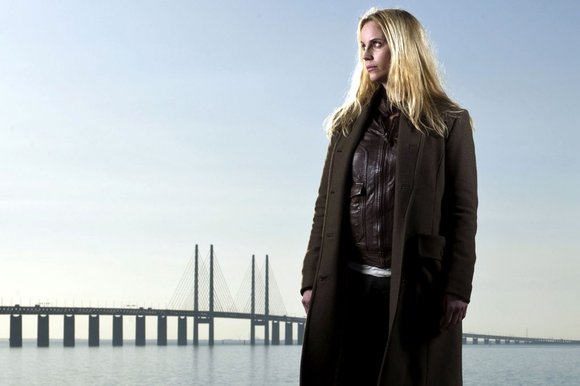
Having never been a huge fan of crime or murder-mystery series’ on TV, I’ve recently found myself addicted to a certain number of them, to the point where I’ve binge-watched them over a number of weeks, leaving my LoveFilm movies to one side as I complete each season. It started with Danish crime series The Bridge, and my girl-crush on lead character Saga Norén, then Sarah Lund in another Scandi-drama, The Killing, and now Carrie Mathison in Homeland. (I’m probably soon to start obsessing over Stella Gibson in The Fall or Gro Grønnegaard in The Legacy.)

I’ve always preferred human stories over complicated whodunnit plotlines so I’ve followed the stories of these women as they’ve led missions to solve crimes and track down villains, not really caring about the superficial plotline, but definitely caring about what happens to them and why they’re doing what they do.

A number of identifying characteristics binds them all and I’m finding it fascinating as to why this is a trend in crime dramas – the rise of the brilliant, yet unstable, often mentally challenged, highly independent professional woman who doesn’t give a toss about family or having children. To all intents and purposes, this is the new version of the maverick, swaggering, ‘fuck you’ trope of the ’70s and ’80s crime dramas, epitomised in male-led cop shows like Cracker or The Sweeney and parodied by Gene Hunt in Life on Mars.

These women walk into bars and pick up guys, they drink too much and they neglect their progeny. They’re brilliant at their jobs but they have trouble interacting socially and are prone to say what they think, even if it’s inappropriate. They’re sometimes highly autistic or bipolar, needing medication to manage their mental state, along with wine. They can’t be bothered wearing makeup or man-pleasing clothes – they simply get clean t-shirts out of their desks or pull on frumpy jumpers and badly fitting trouser suits instead. Who gives a f*ck about appearance when there’s a job to be done?!

I’ve been thinking a lot about this development, and wondering if it’s a bad thing that these brilliant women are being portrayed as child-resistant ‘unnaturals’. Are we meant to celebrate their inhabiting of the lone-wolf space, previously taken up by family-avoiding male detectives, or are we criticising their refuting of domestic bliss for the joy of job satisfaction? The trend has its roots in earlier cop dramas like Prime Suspect and Cagney and Lacey – Jane Tennison and Chris Cagney were allowed to exist outside the domestic space but it was one they at least tried to access. These new women are not even considering it – if anything, human relationships are secondary to their professional ones in a way that has stereotypically been associated with men for decades.

If we’re meant to be critical of these women, then I’m not feeling it. I’m watching these shows precisely because they outline the concept of female independence so clearly. The recent crop of them shows that there is a huge audience fascination with these ladies, and it can’t just be women watching them. I have to admit that my first thought on watching The Bridge was, “typical – to be a successful, non-familial woman in a male-dominated space on TV, you have to be somewhere high up on the autistic spectrum, and your lack of maternal instinct viewed as nothing short of freakish.” Then, as the number of these high-functioning women appearing on my TV screen grew, I started to think that this trend is nothing short of a revolution in female roles both on- and off-screen. Yes, the characters are flawed in ways that fascinate us, but we don’t judge them for non-conformity.

What’s most interesting is that when Skyler White first graced our screens in Breaking Bad, pregnant and desperately trying to hold together a picture of domestic bliss and familial normality, social media exploded in direct criticism of her actions, as though she was somehow spoiling her husband’s maverick crystal-meth-making fun. Even the actress that played her was vilified for the part she played in trying to keep her family together, trying to make her husband conform.

So bring on Stella and Gro because I can’t get enough of these indie women. The plotlines of these series are just a sideshow to the real story – women are dominating our screens in ways we’ve never seen before and I love it. This winter I’ll be swishing around in a military greatcoat (which I’ve had for years, actually) and DM boots, pretending I’m Saga, solving crimes in Denmark, eschewing makeup and letting my hair dry naturally as I stride into the office.

I might stop short of changing my t-shirt in the office in front of everyone, though.

I don’t think we’re ready for that just yet.


Anniversary

Today would’ve been my twelfth wedding anniversary – I got married in 2002 in a small Scottish castle hotel on a crisp, beautiful November day. There were kilts, a ceilidh, fireworks, friends and family. It still ranks as one of the best days of my life, even though the purpose of it has gone away. In many ways, it was a brilliant party that just happened to have a wedding attached to it – I thought so then, and even more so now.

I’ve often wondered why I felt such a strong urge to get married – I pride myself on not following the usual rules of behaviour –but there I was pursuing this goal because it was just ‘what you did’. All my friends had done it or were doing it, and I just had to tick that box. I decided that it had to happen before I was ‘too old’ to go down the aisle, and that thirty-five was my cut-off point. 2002 was my thirty-fifth year.

I knew it wasn’t quite right from the start and yet I pursued it relentlessly. I was the one who asked him to marry me, I was the one who made it all happen, even though he was extremely stressed with work in the year of our marriage and wanted to delay things. I just thought it was procrastination, but in retrospect, maybe he knew it wasn’t right either.

We did it anyway, and it was a huge and wonderful party for about seventy of our friends and family. Neither of us had big families, especially as my parents had died and he’d lost his dad, so there were ‘missing places’ at the wedding that we filled with friends and other loved ones. I made a speech (because of the missing persons), I took myself down the aisle, I arranged the whole thing. I even made myself stay on my own in the hotel the night before, not surrounded by friends and family, and actually a bit scared in the allegedly haunted room. This was all while he enjoyed his last night of freedom with his family and best man back in the village. What was I trying to prove? How alone I could be? I stayed awake pretty much all night.

I knew it was the wrong decision back then, I knew it was wrong on the honeymoon, and I knew for the next eight years. And yet I did it anyway. I know many people – men and women – who’ve admitted to me that they’ve done the same thing and are just going through with it, especially if they have children. It’s really scary, even considering leaving a marriage, and it took me time to gain the courage, and crucially the financial independence, to be able to do it.

When I finally did it, it was so sad. By doing what I’d done over the years, and his going along with it, we’d both lived inauthentic lives and it was time to face reality, in our forties. Essentially, we had been great friends who’d lived a great life, filled with adventure holidays, starter homes, dinner parties and burgeoning careers. There was much to be thankful for and the more distance I get on it all, the more I appreciate it for what it was, and him for what he added to my life. Thank you, if by chance you ever read this. (And by the way, I still can’t watch Out of Africa…)

What I’ve learned from it all is that your gut instinct is entirely correct, every time, in every circumstance. If your heart isn’t in something, your brain and gut know it and they tell you. You must listen to them, because they will steer you correctly through life. I’ve ignored mine in both professional and private life and it’s cost me. I suppose this mistake-making is all part of life experience and everyone does this. If only we’d listen to ourselves earlier in our lives and trust in what we hear. That so rarely happens.

I’ve applied the rule of Gut Instinct to quite a few things now – I only buy clothes if I absolutely LOVE them. Anything less, I know I’ll end up going off them and they’ll be given to charity. I only accept invitations to things I REALLY want to go to, rather than do things because I think I should, or because ‘everyone else’ is going. I only maintain friendships with people who truly add something good to my life and at the first sign of toxicity, back away fast, rather than labour away on something worthless.

The downside is that I often trust an initial feeling about something or someone and back away too quickly, making an ‘insta-decision’ that is so typically too-fast of me. I now catch myself doing it and make myself slow down to really look at the thing or the person, just to see if I’m missing something, if I’m being too hasty. This is the sort of thing I do when I visit new countries (see my Kaleidoscope Effect post) – I go there with all my preconceptions and first impressions and then wait for the reality to reveal itself.

It’s fun, waiting to be disproved about something, because you know, your gut instinct is usually telling you there’s something in there worth waiting for.

Over-baring

Since I’ve got back from the Middle East, I’ve been struggling a bit over what to say about the current slew of female celebrities getting their kit off, Because They Can, in various publications. I rather enjoyed being in a culture where both men and women cover up out of respect for each other, and started to think a lot about why we are so hellbent in the west on getting so much of our flesh out in public.

I’ve already said what I think about ‘The Fappening’, and 4Chan’s privacy violation against female celebrities, in my blog post In Support of J-Law. Everyone has the right to take nude pictures of themselves and a right to keep them private. But in the last fortnight, we’ve had two women (weirdly both of them with the initials KK), both at massively opposing ends of the bodily spectrum, determined to bare all in the name of womanhood and freedom of self-expression.

Why?

Firstly Keira Knightley appeared in Interview magazine, photographed by Patrick Demarchelier, in a series of images in which her body remains unmanipulated by the media. No photoshop, no cleavage enhancement, just as she is. Then Kim Kardashian appeared in Paper magazine, in a series of oiled-up nekkid shots that were intended to ‘break the internet’. Which they almost did, especially with the ensuing parody versions.

I happen to think that both of these women are remarkably beautiful in remarkably opposing ways. I think it’s a shame that Kim has clearly decided to enhance her best-known feature with surgery, but as someone with a pair of womanly hips and a small waist, I feel like this is a world where I can finally get them out with pride. And then Keira – seemingly no work done there, but she is campaigning against the ‘digital surgery’ that often makes her more acceptably womanly on film posters or in fashion features. One woman is flaunting her curves in extreme public displays, the other campaigning against the faking of curves whenever she is put on public display.

Interesting, isn’t it?

It’s also made me think about Lena Dunham, and her ‘I’ve got my body out and I don’t care if you don’t approve of it’ scenes in the TV series Girls. Her physically and digitally unenhanced body, seen in a number of nude scenes in the show, has attracted a raft of criticism from men and women alike, but that’s her point. Why should she look like Kim or Keira when she is really Lena? And who is dictating these rules?

In many ways I applaud all of these women for putting it out there – Kim looks gloriously (and uncharacteristically) happy in her images; Keira is poutingly defiant, and Lena acts care-free and unconscious of society’s disapproving gaze. Well done, you, I think, but then wondering why the hell they had to go that far to make their points. I’ve often laughed with guy-friends about their tick-box lists of female celebrity tits and ass – how the urge to see every hot woman naked in order to ‘tick them off the list’ became a thing that they did, consciously or unconsciously. It’s the infantile thing that Seth Macfarlane’s ill-advised Oscars song, We Saw Your Boobs, seemed to sum up perfectly, to the horror of the women in the audience.

Did these women bare all just to finally get the guys, and the media, off their backs? Once they’ve bared everything, does it mean they’ll be hounded less by the 4chans of this world, who’ve already moved on to the next starlet? What is it about the forced uncovering of women that makes female celebrities decide to do it themselves, so that they can control the outcome? Is it empowering or is it the ultimate sacrificial gift to the media that is hounding them already?

I realise I’m asking lots of questions here and not really answering them. I do think that there is great power in remaining clothed, in holding something back from the world (but only when that holding back is unenforced). I’m clearly part of a zeitgeist for women who are ‘baring all’ in terms of their experience (including Lena Dunham) but is that really the best thing to do? I have already said that part of the reason I am putting it all out there is because no one will be able to use anything against me in the future. There are no secrets for them to pounce on. Isn’t that what Kim, Keira and Lena are doing? All of us are owning our bodies and our lives but in the process we are letting everyone else have a piece of them too. It appears to be the domain of the modern woman. I’m all for having a voice that is heard, but are we saying too much?

It’s interesting that in the same period as the double KK bare-all, Nick Jonas, the erstwhile virginal member of the pop group the Jonas Brothers, did a Wahlberg-alike photoshoot for Flaunt magazine in his pants. The story registered as a medium-sized blip on the radar of various gay and women’s interest websites, and yeah, I had a look. He’s hot. But he’s one guy in a sea of a bajillion women doing this sort of shoot every day, for lads’ mags, for Page 3, for the latest ‘it’ magazine that promises them not to enhance their boobs and make nudity ‘arty’. We’ve moved on from Jonas already. Who cares if a guy takes his top off?

For women, holding back and wearing more might be the ultimate empowering thing to do with just a glimpse of a bared shoulder or ankle, but would you do that if you knew that your private bare-all photos made for your partner were likely to be posted online the very next day, rendering your peekaboo clothed pictures ridiculous? If you knew that the latest celeb magazine was going to show a range of high-definition images of you in a bikini on your holiday on its front page, and a close-up of your face without makeup, would you grin and bear it or rush out a series of naked, no makeup shots taken by a top photographer for a cool magazine?

I think I’d want to own my own images if I knew that these were the rules of the game, so I can’t blame the two KKs for doing what they’re doing. Kim K knows that her greatest social currency is her body and she is setting the bar higher and higher for how much she’ll show us, and how far she’ll go to enhance it. Many will say that they’re not interested in her antics, but I bet they have a good look before dismissing them.

As I write this piece, Gemma Collins, ‘star’ of reality TV show The Only Way is Essex, leaves the I’m a Celebrity Get Me Out of Here jungle to a tidal wave of fat-shaming tweets. When the ‘bikini shower scene’ becomes a woman’s main social currency on TV, and she’s pitted against ex-model and lads’ mag favourite Melanie Sykes, I’d be out of there too.


Because I Can: the story so far

Having been the lucky recipient of a ‘Freshly Pressed’ feature with my post ‘Bare-Faced Cheek’, I thought I’d round up the top ten posts from my archive for all my new WordPress followers. So far, most of my viewers have been outside the blogosphere, coming to this site from Twitter or Facebook, but now I feel part of a community of bloggers with similar interests and views.

I started the blog because I found that I had quite a lot to say about my situation, leaving a marriage at the age of 43 and spending the last four years being constantly surprised by the twists and turns of life outside conventional coupledom. Some of them have made me laugh or whoop with joy, some have made me cry and floored me with unexpected cruelty.

Anyway – here are the posts that tell my story so far – I hope you enjoy them:

1. Where it all began:

https://becauseicanblogdotcom2.wordpress.com/2014/07/20/consciously-uncoupling/

2. On being childfree-by-choice:

https://becauseicanblogdotcom2.wordpress.com/2014/07/25/ping-pong/

3. On body image and the ridiculousness of dieting:

https://becauseicanblogdotcom2.wordpress.com/2014/07/24/epiphany/

4. On suicide:

https://becauseicanblogdotcom2.wordpress.com/2014/08/12/the-silence/

5. On not being a yummy mummy:

https://becauseicanblogdotcom2.wordpress.com/2014/08/17/the-one-where-im-absolutely-not-a-yummy-mummy/

6. On dating younger men:

https://becauseicanblogdotcom2.wordpress.com/2014/08/23/in-praise-of-younger-men/

7. On Toxic People:

https://becauseicanblogdotcom2.wordpress.com/2014/09/10/toxic-people/

8. On dating men my own age:

https://becauseicanblogdotcom2.wordpress.com/2014/09/19/sixth-date-syndrome/

9. On not being a Cool Girl:

https://becauseicanblogdotcom2.wordpress.com/2014/10/09/my-former-life-as-a-cool-girl/

10. On keeping my name:

https://becauseicanblogdotcom2.wordpress.com/2014/10/16/my-name-is/

Thank you for reading.

Lisa.

Angry Young Men

In a recent post I mentioned an angry Parisian man I’d dated in the past year, but didn’t tell the story, saving it for a future post. It came back to me this week, because I read this piece about a woman called Alexandra Tweten who is ‘outing’ abusive online-dating matches for their sense of entitlement to her attention:

http://m.theatlantic.com/health/archive/2014/10/rise-of-the-feminist-creep-busting-web-vigilante/381809/

Fortunately, it hasn’t happened much to me, mainly because I use Tinder, where the matching is reciprocal and you don’t have to deal with the tidal wave of unwanted attention as soon as you appear on there. (Here’s my piece on Tinder: https://becauseicanblogdotcom2.wordpress.com/2014/10/12/tinder-is-the-night/).

Tweten is using OKCupid which is pretty much a free for all for wanted and unwanted attention. But actually, abusive moments HAVE happened to me, even with all my careful filtering and my supposed radar for nice guys, and when it does happen it is a very scary experience.

(A quick note to all the nice guys out there whom I date or don’t date: this post isn’t representative of you, it’s a group of a*holes of which you are not part. Please don’t get all defensive about men in general because I’m not talking about all men. You just need to know that this stuff happens to women. All the time. Thanks for reading and supporting me – I’m very glad to know you.)

So, the Parisian. Let’s call him ‘Maxime’. He described himself as 31 and 6ft 7. Yes, Maxime was tall, dark and handsome, played basketball in France semi-professionally and could string a sentence together in a text. Against my usual rules of not letting anyone have my number before I’ve met them in real life, we Whatsapped before our date, and he seemed ok with my ‘no sexting or pics’ rule. So far, so normal.

To the date. We met at the Ape and Bird – a fab pub in London on Cambridge Circus owned by the same people who run Polpo. It’s perfect for dating – lively enough to fill in awkward silences, three different bars to choose from if you need a change of scenery, and the option of eating in the bar or restaurant later if the date goes well.

The warning bell started to sound when I met him outside the bar. He was lounging louchely against one of the windows, smoking of course. What Parisian doesn’t? He seemed to not want to make eye contact, which I put down to being at a different altitude to me, or maybe just nervousness. Ok, let’s get to the bar. The choosing of the drinks took a while – I know exactly what I want in there (the Garganega house white is great) but he huffed and puffed over the choice of beers. I laughed to myself and thought, ‘how Parisian’ as he took time to choose just the right drink. How very French.

The second alarm bell rang softly as he talked at length about his life, his likes and dislikes, his travels, his favourite food, his his his his his… I just settled into the usual ego-pleasing nodding routine, wondering how I was going to extract myself from the scenario. But then the wine kicked in, and I thought, ‘well, things could be worse’ and somehow we ended up staying and getting a table for dinner in the bar.

Ok, so the choosing of the food took a while – Ape and Bird have a ‘distinctive’ menu with uniquely British things on there that threw Maxime a bit. I think he ended up with steak and chips – so far, so French. I can’t remember what I had, because the whole moment was blighted by his fussing and faffing over the food. “This is not steak!” he cried, forking the meat with a sneer on his face. I’m afraid I just started to laugh, and to tease him about being so French about his food.

Oh dear.

One does not tease a French man about his food.

He got very, very angry with me. And all British people, really. For not having the balls to complain about food. I don’t complain, as a rule, unless it’s really terrible and I can’t eat it. I’ll have an opinion on it, but if it’s not ‘wrong’, then I won’t send it back. Not Maxime’s style it seems.

So he made a huge fuss and I ended up apologising to the startled waitress when he’d flounced off to the loo (in a 6ft 7 gangly way). I did contemplate paying and leaving while he was down there, but I thought, ‘no – I’ll see this through like an adult’. What he obviously thought in the loo was, “I’ve paid for drinks for this woman and am about to pay for half a meal I didn’t like – I’ll damn well have sex from her in payment.”

When he returned to the table I’d already ordered the bill and made noises about leaving. “You’re going home?!” he asked incredulously, as if his table manners had undeniably wooed me into sexual submission. “Yes – I’ll be going to Piccadilly Circus – where do you need to be?” He was determined to come with me.

So there I was, striding down Shaftesbury Avenue with a massive Frenchman, angrily snarking at me about how it was ok to complain about food. I kept a fixed smile on my face so as not to anger him further – it felt as though he was about to blow (I certainly wasn’t).

I may be making you laugh with this story, but reader, it was so not funny. I genuinely felt really scared. When he suddenly swerved off into a Chinatown street, I felt relieved, but then panicked as to where he was going to pop out and accost me. I scanned the tube, the bus stop on my way home, the outside of my building – everything. Thankfully a friend was in the pub down the road and I went and told her the story, still shaking slightly from the encounter.

In the last month I’ve had another miniature version of this, in which again, I gave my number out when I should not have. I made it clear that I had no intention of picture-swapping or sexting, but this ‘nice guy’ Toby just wanted to hear my voice. Ahh how sweet. Until he got on the phone, telling me he’d lost his voice and asking, “could he just whisper to me?” “Stalker voice!” I teased, but I’d actually started to wonder…

“Could he also talk about lots of other things he’d like to do?”

No.

He put the phone down in a fit of rage, quickly followed by Tinder messages telling me I’d “spoiled the mood.” I managed to unmatch him on Tinder pretty quickly, but then came the stroppy “that was mean” texts on Whatsapp, which I subsequently blocked. I then got a barrage of ‘no caller ID’ calls for the next two days – with no voicemail, thankfully. But I was truly scared at what this person might do. Could he track me down and wait for me outside work or my home? When would he stop calling? After two days, thankfully.

I’ve wondered over and over about what I did that made these guys feel entitled to be so angry with me, and then I realised. I was just a woman who refused to give them what they felt they deserved and they got angry, even though I was very clear about what was and wasn’t going to happen. It’s like my voice merged into white noise under the loud gushing sound of their monstrous egos in motion.

I’ve only just remembered about a guy I dated about three years ago who made me cry on a date. Yes, cry. He’d been dumped by his last girlfriend and his ‘little revenge’ was to make women feel crap about themselves. The way he did it with me was to flirt outrageously with the waitress and ignore me. He was happy with me over the pre-dinner drinks, then grumpy over the menu, refusing to look me in the eye, then all over the waitress every time she appeared. I let him do it over and over and just sat there in disbelief. Then he smiled cruelly as he asked me if I was crying, which I was a little bit. I’ve never been made to feel so rubbish in all my life.

And it will never happen again.

—————–

Jessica Valenti on why some men are so angry:

http://www.theguardian.com/commentisfree/2014/oct/27/why-are-some-men-so-angry

Katie McDonough on male entitlement to women:

http://www.salon.com/2014/10/30/americas_catcalling_madness_what_michael_che_co_keep_on_missing/


Bare-Faced Cheek

For about six months now, I’ve been conducting an experiment with myself. It consists of a simple thing, that will be normal to many women, but it’s not normal for me – going out into the world with as little makeup on as possible, if any.

A few years ago, I saw a counsellor who set me a challenge – think of something that would take me out of my comfort zone and do it, one day a week, for a month. I thought of the worst thing possible for me – going out without makeup on – and chose to set myself that task. I remember going to work, cringing inside, head bowed low … and finding that nothing happened. I had to ask someone – a woman who always commented on everything I wore or my hairstyle – if she’d noticed anything different about me. She just said I looked a little paler than normal (that’s something for me, as my default shade is white), but she had to be prompted to say so.

I immediately went back to wearing the makeup but felt really pleased that I’d completed the challenge. It made me question why I felt the need to wear makeup all the time and why I felt ashamed without it. Why I felt I looked hideous. I questioned it but I carried on ‘using’ – some habits are hard to break. I’d been wearing makeup since I was 14 –  I was fascinated by my mum’s beauty routine and loved trying things from the basket of goodies on her dressing table. I distinctly remember being told off by the deputy headmistress to take off my blue Rimmel eyeliner with Pond’s Cold Cream in the girls’ loos. And the matching nail varnish.

Years later, I remember telling that counsellor that I felt ‘exhausted being me’. I didn’t know quite what I meant at the time but it had less to do with all the challenges of a burgeoning career and more to do with the ‘lady maintenance’ that came with it. I felt I had to be perfect at everything – brilliant at my job, at looking good, at fitness, at home life. Of course, no one can be, and the strain had started to show. The daily armour of clothes and makeup were just a fact of life for me, and the ex-husband who had to wait for me to don it, even for a trip to B&Q at the weekend. While most people ‘upgrade’ their lives on holiday – staying at nice hotels, taking their best outfits with them for glamorous cocktail evenings – I began to love our ‘roughing it’ holidays, where I wore (almost) no makeup and ‘outdoor’ clothing the whole time and went to bed when it went dark. This, for me, was relaxation. No more armour – just me.

When the ‘No Makeup Selfie’ craze started last year, I posted a defiant ‘NEVER’ on Facebook, and then immediately wondered why I felt so strongly about not doing it. I often think my friends look more beautiful without makeup, and their selfies showed it. Why not me? I genuinely thought I looked hideous and it took me until this summer to take one of myself, where I thought, ‘actually, I look ok’. But I didn’t post it.

I only decided to pull back on wearing so much makeup when I watched the movie Boyhood this summer, starring Patricia Arquette. In it, she plays a mother around my age, and the action is filmed in real time over the course of ten years. I was fascinated at how beautiful she looked, with minimal makeup and fresh-faced maturity, year after year. I thought I’d give it a try the next day and then didn’t stop. I went to bars and clubs with just mascara and myself. Nothing changed. Same reaction from women and men, the world continued to turn, I felt more authentically me. I suppose that bit was the real change. I didn’t need a ‘smoky eye’ to attract attention – confidence is the key.

Part of the reason for writing this blog is about presenting an authentic self – look at me from any angle and you get the same person. Twitter, Instagram, Facebook, blog, real life – it’s all the same version of me, seen from different camera angles. If I’m going to be honest on here, then I’m going to reflect that in real life. Here I am. Unadorned, unfiltered. And I like it.

It made me so sad to see the furore surrounding Renee Zellweger and her radical face change. She appeared at a Women in Hollywood event this week and has faced a barrage of criticism over apparent ‘work’ she’s had done to stave off ageing. Beautiful, cute Renee – years of maintaining that facade has carried forward into a desperate need to change her amazing face at 45. The face that’s been key to her career, that has never been ‘classically’ beautiful but able to assume characters so easily, that has made us all love her.

Like many actresses in her forties, Renee’s scrabbled around to salvage something from her youthful image and in the process lost something of herself. She’s been trolled mercilessly about it by the same people who would criticise her for having the temerity to appear in public looking her actual age. If I was her, or Courtney, Jennifer, Cameron or Sarah Jessica, I’d have buckled under the pressure and had the work done too. And look at Claudia Winkleman – a woman I admire greatly, forced to retreat behind her fringe and heavy eye makeup just for daring to go without both for one night when presenting Strictly. Shame on you, Twitter. I thought she looked amazing as we saw her as she really was, for one brief moment.

It feels odd to finally like your face after forty-seven years on the planet, when undoubtedly it was much more pleasing to look at about twenty-five years ago. I remember liking my reflection when I was 14/15 then suddenly hating it at 17/18. Something happened to make me switch and I wonder if it was the realisation that there was a set of ‘lady rules’ I was meant to abide by. I realised with horror that I’d been caught not following them and scrabbled around to catch up. For heaven’s sake, I’d been out in the world with nothing but lipgloss , a sweatshirt and stretch jeans – what was I thinking?! Give me my armour now.

I’ve not completely given up on makeup and nice clothes – I love fashion and beauty and will never stop loving them. What’s changed is that I don’t feel I have to do them. It’s a choice. If I want to have a smoky eye, I’ll have it – I just don’t feel it’s absolutely necessary to cover up my shrinking fortysomething eyes. If anything, it calls attention to them. I will look people in the eye with only mascara for cover and not flinch, but more importantly, I’ll look at myself in the mirror and smile.

Hello you.

————————————————–

My Year Without Makeup:

http://www.salon.com/2013/01/10/my_year_without_makeup/

On ageing and plastic surgery:

http://www.salon.com/2014/10/27/i_know_renee_zellwegers_pain/

My Name Is…

Much has been made of international human-rights lawyer, Amal Alamuddin’s decision to take the name of Clooney, following her marriage to the actor, George. The world is still divided into those who do and those who don’t take their husbands’  surname, with a venn-diagram central portion who put both names together. Cute.

It made me remember that moment when I got married and took my (now ex-) husband’s name, and how wonderful it was to state it proudly on every bit of paper, and in every situation. Hello, I’m Mrs Mudie.

I know what you’re thinking. How do you say that? It’s east-coast Scottish: pronounced Mew-dee. Every time I went anywhere or made a phone call involving stating my name I inevitably had to do two things: a) correct their pronunciation from ‘Muddy’ or ‘Moody’, and b) spell it out: M. U. D. I. E.

At first, I rather liked the novelty of it, but it soon became tiresome. Especially when I received a letter to ‘Mrs Nudie’. But we laughed about it, and all the variations on pronunciation and spelling just became a fact of life for me.

During the final year of my marriage and my push for independence and freedom I began to realise that I’d lost something of myself. Part of that self was to do with my name. The only situation I’d not changed my name in was work, and at the time, my career was burgeoning. I was working on movie tie-in publishing, getting a name for myself on the conference circuit and making my mark in the world. The person doing this wasn’t Mrs Mudie – she was very much Lisa Edwards, and still is. She was who I wanted to be.

When I became single I wanted to change my name back so badly, but there was a period where I was waiting for the divorce to come through, where I had to remain with my married name while the paperwork was completed. I went on holidays, alone, as Mrs Mudie, bought a flat as Mrs Mudie and paid my bills as Mrs Mudie. How weird to still be her and yet doing all of these independent things.

I finally changed my name back last year and it felt so good. One of my favourite bits in Sex and the City is when Carrie loses her precious ‘identity’ necklace with her name on it – the one she wears throughout the series. She is with a man whose ego – his life, his work, his needs – threaten to subsume hers and the moment is poignant. And then comes the joy of rediscovering the necklace in a hole in her vintage purse – marking the moment when she comes out of this unsatisfactory relationship to find herself again. Fairly obvious stuff, but it always makes me very happy when I watch this scene – I know how delicious that feels.

There are still a few moments when the odd bit of mail comes through from a company that still has my old name and they hit me like a tiny electric shock. Oh yes! That used to be me! I have loved getting my real name back again. Edwards. It’s such a Welsh name and I am proud of it. My grandmother’s name was Dilys Myfanwy Edwards, and I always say you can’t get much more Welsh than that (although I don’t know her maiden name – but I’m betting it was Jones, Roberts, Thomas or Davies).

I’ve recently been typing up my father’s attempt at writing a memoir – he didn’t get very far, but I loved all the names in the first part of the story – Welsh names aren’t hugely varied so the Joneses and the Roberts’s feature heavily. There’s even a Mrs Roberts the Shop, like something out of Under Milk Wood. I like that my name comes from a small pool of names that are an immediate regional identifier – of course I’m Welsh.

People ask me where I got my Twitter name from @Redwoods1 – this comes from the fact that my full name is inevitably pronounced Lisa Redwards, because there are two vowels together in Lisa Edwards so it’s easier to put an R in there when you say it out loud. Redwoods then became a bit of a nickname for me on a holiday during my final months as a married lady. I’d gone away on the spur of the moment with two work girlfriends to San Francisco. It remains one of the best things I’ve ever done – we’d decided to go during a wine-drinking session after work, and put our plan into action (I still can’t believe the company let all three of us managers go). For part of the trip we stayed in a gorgeous cabin in the forest in Sonoma. After visiting various wineries by day, we lounged outside in the hot tub, drinking Corbel sparkling wine, surrounded by Redwood trees. ‘Redwoods!’ one of my friends exclaimed. ‘Lisa Redwoods!’ The name stuck, not least because of my reddish hair.

That holiday was a turning point for me. Redwoods beckoned – the woman who wanted to experience the world as an independent person, who wanted to get on a flight to SF without thinking about it and end up in a hot tub in Sonoma with two girlfriends, a gay couple and a load of sparkling wine, smiling up at the trees.

So here I am.

Because I can.

——————

Why do we care so much when women change their maiden names?:

http://www.huffingtonpost.co.uk/poorna-bell/amal-alamuddin-clooney_b_5981286.html

My Former Life as a Cool Girl

The release of Gone Girl in cinemas recently has reminded me all over again about why Gillian Flynn’s book resonated so loudly with me and other women when it was published.

This key paragraph, from the main character Amy Dunne, establishes the central concept of womanhood in the book:

“Men always say that as the defining compliment, don’t they? She’s a cool girl. Being the Cool Girl means I am a hot, brilliant, funny woman who adores football, poker, dirty jokes, and burping, who plays video games, drinks cheap beer, loves threesomes and anal sex, and jams hot dogs and hamburgers into her mouth like she’s hosting the world’s biggest culinary gang bang while somehow maintaining a size 2, because Cool Girls are above all hot. Hot and understanding. Cool Girls never get angry; they only smile in a chagrined, loving manner and let their men do whatever they want. Go ahead, shit on me, I don’t mind, I’m the Cool Girl.”

And in the brilliant article on the subject by Jezebel’s Tracy Moore (link to the full article below), she encapsulates the concept:

“…when a woman for whatever reason embraces traditionally straight male interests while retaining aspects of straight female interests, and is hot (she always must be hot)—when she manages, for all intents and purposes, to somehow combine the best of both genders into one bangin’ superpackage of awesomeness—you have what is called a Cool Girl.”

I was trying to be Cool Girl, at least for a while. My phase timed with the emergence of the ’90s ladette, which to all intents and purposes was the defining era of the Cool Girl. Women like Sara Cox and Zoe Ball were bouncing around on our TV screens and in lads’ mags, drinking pints, partying ’til dawn and still managing to look oiled and hot in a tiny vest and denim shorts as they leered lairily at the Loaded cover-shot camera.

When I met my husband I tried desperately to be the Cool Girl – he seemed very keen on the Loaded ladettes and I scoured the pages of his magazines to pick up tips on how to be one. I was determined, unlike his friends’ wives and girlfriends, to give him as free a rein as possible, to never complain (indeed, actively encourage him) when he announced a boys’ golf weekend or a skiing holiday, or when he got wasted with the boys. I even actively embraced any trips they made to a lapdancing bar, which I was told to keep secret from the other wives – I was the ‘Cool Wife’ who would laugh at their stories of who got a dance, and then ask questions about how they controlled their erections in a public place (I’m still not quite clear on that, or on why they would want to risk it happening).

I remember feeling really aggrieved when I once overheard him talking to the lads, referring to me as some kind of social sign-off person on their latest boys’  weekend plan – they were all discussing how they’d get it past their wives. I burst in on their conversation and pointed out that he was free to do what he liked (subtext – I was not like the other, more controlling, wives). They all looked at me, rather shocked, and he was embarrassed – I’d spoiled his ‘lads-only’ camaraderie over their shared experience of the stereotypical controlling woman.

Over the years, I continued to be a version of Cool Girl and kept any grievances inside. And they festered. And in the end, these internalised resentments built up and up until they spoiled everything. I wasn’t really me during those years and I wasn’t honest with myself or my husband. I don’t know why I pretended to be someone else who was cool about everything, when I seriously wasn’t. This is why my ‘honesty policy’ is so important to me now. During those thirteen years of the relationship, I hardly ever raised any grievances, for fear of a horrible confrontation –  I just saved them up into one massive one that ultimately couldn’t be resolved. It had all gone too far.

It really surprised me that my ex and his friends pretty much all ended up with women who clearly ‘set the rules’ in their households, and seemed to enjoy being told what to do. I tried and tried not to be that woman, but ultimately it backfired. But I always maintained that I was a director at work and didn’t want to direct the marriage at home as well – I’d still maintain that mantra, if I ever went there again.

In many ways, the last four years have been about gradually shedding the need to be Cool Girl. I’ve found myself more and more exposed to the realisation that I don’t need male approval to be in the world, and that some men aren’t expecting to approve me according to the Gone Girl rules (some are, though, it has to be said.) I now see female friends masking grievances in their own relationships with gritted-teeth smiles and feel glad that I’ve left those scenarios behind. If I ever got there again, I would make sure I never let these scenarios pass without comment – that a reasoned discussion would happen about every single one, if I felt something unjust was happening to me. I’m pretty sure any reasonable guy would expect me to do that – it’s how they would deal with those things. Mostly.

When I first read Gone Girl I couldn’t believe that someone had written about Cool Girls so brilliantly – lots of female friends were clearly experiencing the same self-resonance as I was when they read it. Our online book club was alive with comment. I think we all recognised something of ourselves in Amy, although of course, she takes the concept to an extreme level.

I don’t think it’s a coincidence that many women of my age find the concept so familiar – I do think the ’90s emergence of ladette culture really didn’t do us any favours. Men were being marketed with a feminine ideal that has no basis in reality – a complete fantasy of sexual availability, hotness, and, well, blokiness. I know I struggled to meet its impossible criteria, but it didn’t stop me trying.

Thank goodness that’s over.

http://jezebel.com/the-cool-girl-is-not-fiction-but-a-phase-1642985632

A Comment on Women and Food

Last year, I gave up any form of weird food restriction after a Dieting Decade which saw me trying every single fad going to keep my weight under control. Atkins, Dukan, 5:2, GI – I’d done the lot. And I was heartily sick of it.

I had my ‘epiphany’ on a Turkish beach, when I suddenly realised that it was all utter bollocks – I didn’t have to adhere to some magazine advertising executive’s view of female body shape and I could simply be me, as I am, eating normal foods and being my normal shape. The world didn’t end and I didn’t suddenly die socially – if anything, I became happier, more confident, sexier and sharper-minded. I simply realised that restricting food restricts a woman’s ability to perform well in the world and I describe my Road to Damascus moment here: https://becauseicanblogdotcom2.wordpress.com/2014/07/24/epiphany/

Since then, I’ve really noticed how other women seem amazed that I order normal food in restaurants, and don’t sit there picking at a protein-based salad (as I used to do). When I offer up the excuse that I walked to work that morning (it takes an hour and twenty minutes) they seem happy that I’ve ‘earned’ the right to have a proper meal (ie with carbohydrates). What I’m eating is always commented upon, and I notice more and more that the other women feel the need to ‘be good’ at the dinner table. And to tell everyone about it.

I went for a dinner last year with a group of friends and sat next to a Serial Restricter. She talked about the calorific value of her food throughout, then told me all the various ways she was going to ‘work it off’ the next day. When women go out for meals together the topic often turns to weight control, and the more they eat and drink at that meal, the more they tell everyone about all the ways they’ll keep the weight off afterwards. I used to do it too. Yawnsville. You can guarantee the guys aren’t talking about this shit.

Recently, a friend I hadn’t seen for a while turned up for lunch and another female friend immediately ‘complimented’ her on how ‘skinny’ she looked. A little piece of me died inside, knowing that this is the first thing we value, or monitor, about each other. Now, I make a point of never commenting on appearance, until I’ve at least asked about how a friend’s life is. And that applies to women and men. If I tell them they look ‘well’, it’s because they truly do look healthy – I’m never going to use it as a codeword for ‘slimmer’, which is what most women do.

I’ll never forget seeing a work colleague take a brownie from someone who’d baked for the office and watching her scrape her teeth down it before discreetly throwing it in the bin. That moment has stuck in my mind as a truly tragic one. This woman was, and is, an amazing person. She is better than brownie-scraping.

But women in groups police each other’s weight. Codewords are used to comment on shape and you get used to your body being surreptitiously scanned by other women when you walk into a room. I’ve worked in female-heavy offices where eating disorders break out because one woman goes on a crash diet. When I taught ballet, a promising young girl of twelve became anorexic because another girl told her she had a ‘funny’ body.

I think that women owe it to themselves to be strong and healthy-bodied, able to stand, walk and run in the world without fear of a small gust of wind knocking them over. I think we owe it our brains to keep them well-fed, so that we are able to speak confidently, debate loudly and deliver a killer pitch at work. Not to mention show younger women a good example. You can’t do any of this well if you’re surviving on 500 calories a day.

Ladies, let rip. We don’t need to do this. No one is asking us to be control-freak skinny and unhappy except us. And we are agreeing to it because we think that’s what the world wants from us. Ask yourself who is going to love you more for being ‘skinny’ – possibly the magazine advertising executive because he/she is selling you products based on your biggest fear. It won’t be anyone else, not even you. Because you’ll never be skinny enough.

Don’t be scared. Have the brownie, then walk out of the door and take up your space in the world.

You’ve earned it.

———————

On policing women’s appetites: http://www.dailylife.com.au/life-and-love/parenting-and-families/stop-policing-my-daughters-appetite-20140423-373ur.html